Three best lenses for landscape photography
Want to know the best lenses for landscape photography, but don't know where to start? This post will help!
Landscape photography is incredibly broad. One moment you’re capturing sweeping ultra-wide scenes at 12–16mm that feel bigger than human vision, and the next you’re zooming to 100–300mm to compress distant mountains into powerful layered compositions.
Both are valid choices, and both are equally important.
If you’re serious about improving your landscape work, you need the ability to shoot across multiple focal lengths so you can shape the scene based on the lighting and conditions and not just record it as if you are looking with your naked eye. So, let’s break down what each lens actually does in the field and when you should use it.

Wide Angle Lenses - think close, shoot wide
Examples: 10-22mm (crop sensor), 12-24mm (full-frame), 16-35mm full-frame)
Wide angle lenses are your go-to for scale, drama, and immersing yourself in a scene. Our natural field of view sits around 35-50mm. When you shoot wider than that, you create a sense of vastness, giving the viewer the feeling that the landscape is too big to take in without turning your head.
Wide angles are perfect when:
The scene is grand and feature-rich
You want strong foreground interest
You’re close to your subject
You want foreground + sky storytelling
For years, my 16–35mm was on my camera about 80% of the time. Even now, while I deliberately shoot more mid and long focal lengths, it’s still a core landscape lens and I wouldn’t go anywhere without it!
Key principle: Wide works best when your foreground is strong. If the foreground is weak, then shooting wider just makes it seem even emptier.

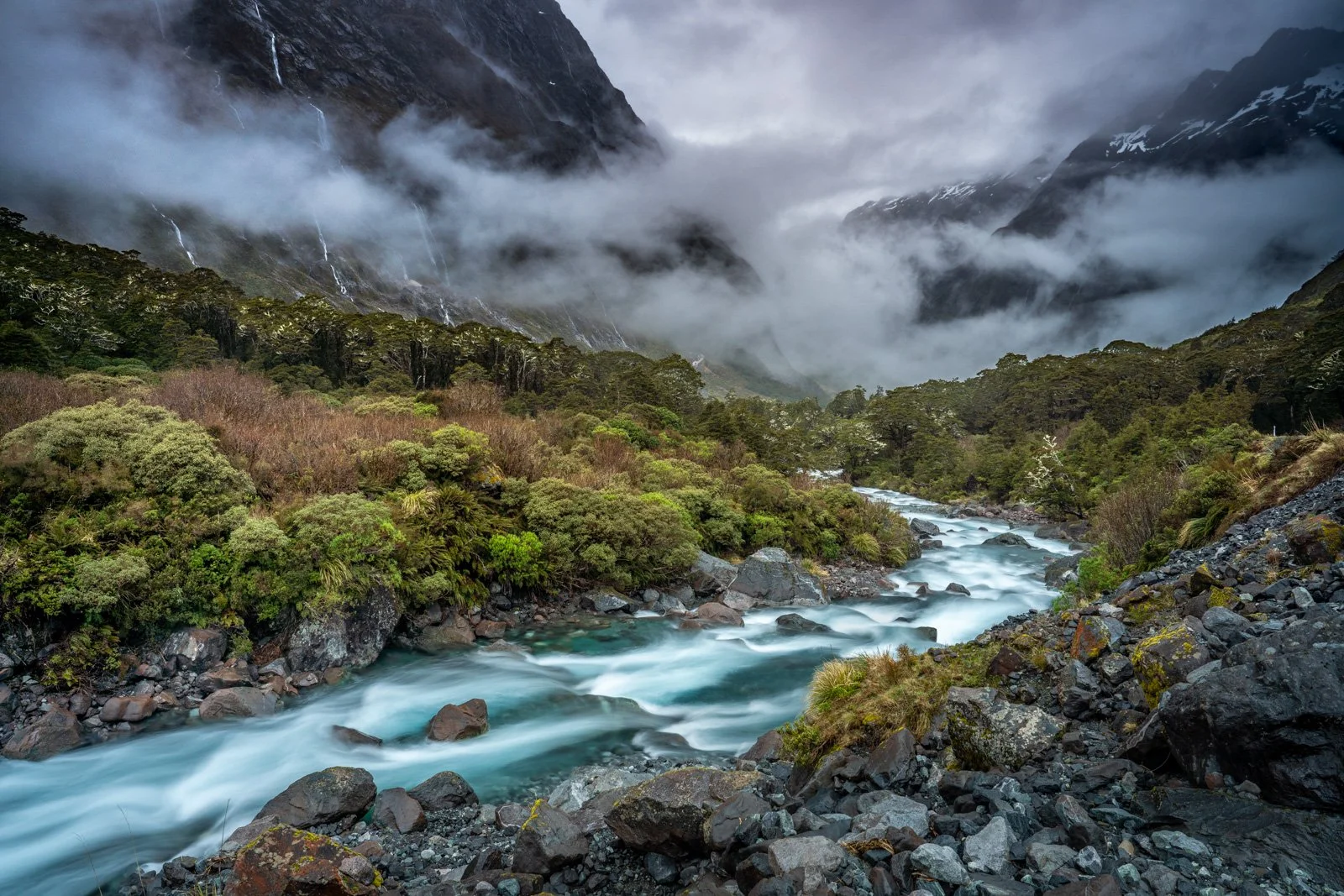
Shot at 16mm to fit in the entire wide scene before me as well as incorporating foreground interest
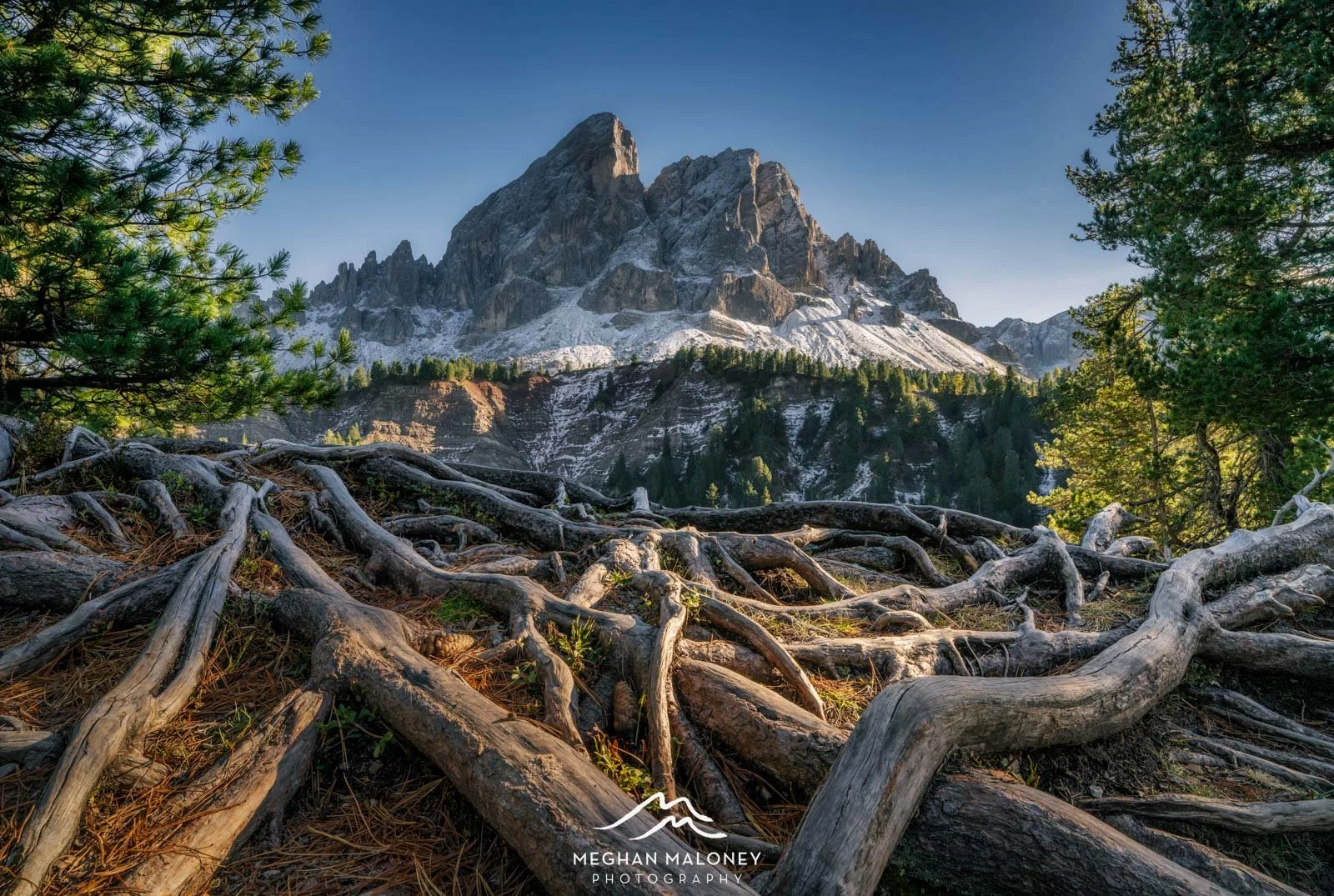
Shot at 17mm down low close to the roots to incorporate the interesting foreground and to add depth to a grand scene
Why Not Go Even Wider Than 16mm?
Ultra-wide lenses like 12–24mm can be fantastic, but many have fixed bulbous front elements that prevent the easy use of filters. Since filters, like my Kase Filters Armour kit (I use a polariser and graduated ND filter all the time) are essential in my workflow, lens/filter compatibility matters more to me than a few extra millimetres of width. Plus I can always switch to vertical mode and shoot a 3-shot wide vertical panorama to give me the extra millimetres I need for a wider overall view.
But what Aperture should I buy? F2.8 vs F4
| Choose f/2.8 if you… | Choose f/4 if you… |
|---|---|
|
|
I started out with a 16-35mm f/4 lens and was very happy with its performance , it was only when I started capturing astrophotography scenes that I felt I needed more light in these very low light situations, and wanted to keep my ISO under control.
A lower f/2.8 aperture will also give you the ability to capture a shallower depth of field and better bokeh which looks great for other types of photography like portraits.
The f/2.8 version of the Sony 16-35mm lens also produces much nicer looking sunstars due to the higher number of aperture blades (11 vs 7).
Ultimately you have to weigh up both the cost and weight vs the extra benefits you will get from having a lower aperture, e.g. the Sony FE 16-35mm F2.8 GM II lens is twice the price of the Sony FE 16-35mm F4 lens, and is slightly heavier, wider and longer, but I certainly haven't regretted the upgrade.
Mid-Range Zoom Lenses - one lens to rule them all!
Examples: 18-55mm (crop sensor), 24-70mm, 24-105mm (full frame)
If you could only own one lens for landscape photography, this should be it.
The 24–70mm range is incredibly flexible because it is:
Wide enough for big scenes
Long enough to isolate subjects
Perfect for travel
Ideal for changing compositions quickly
It’s also the best training lens for composition because it forces you to think in framing choices, not just “go wider.”
I really underestimated this lens early on. Now it’s my most used lens, and the only one I take when space or weight is an issue, and I have to choose just one!
It’s especially valuable when:
Shooting from aircraft
Working from fixed viewpoints
You can’t physically move position
Here is an example of shots taken at either end of the focal range:

Shot at 24mm to take in the sweeping scene including sky and beach reflections - New Brighton Pier, Christchurch

Shot at 70mm to make the pier more of a focus
Another time that a 24-70mm lens is really useful is for aerial photography like this scenic flight with Glenorchy Air between Queenstown and Milford Sound. Often you are flying very close to the mountain peaks so you need the ability to shoot very wide to fit these peaks in, whilst at other times you want to bring lakes and scenes far below or far away closer into view which is when the 70mm comes into its own.

Shot at 24mm while flying close to Mt Earnslaw - Glenorchy Air

Shot at 70mm to bring the distant lake scene closer
Telephoto Zoom Lenses - the secret weapon
Examples: 55-200mm (crop sensor), 70-200mm, 70-300mm, 100-400mm (full-frame)
Telephoto lenses are massively underused and underrated in landscape photography but they are incredibly powerful.
They don’t show more. They show less, which often equals better.
Long focal lengths:
Compress distance
Stack mountain layers
Emphasise scale relationships
Isolate light patches
Simplify chaos
Back when I started it in landscape photography, I only used my telephoto maybe 10% of the time, now I try to ensure it comes on almost every shoot. With high-resolution bodies especially, the detail you can extract from them is extraordinary, even when you have to crop further than the longest focal length
Here are some images taken with longer focal lengths which bring the mountains into close display at different focal lengths:

Shot at 70mm looking across the lake to the mountains, Lake Camp Ashburton Lakes
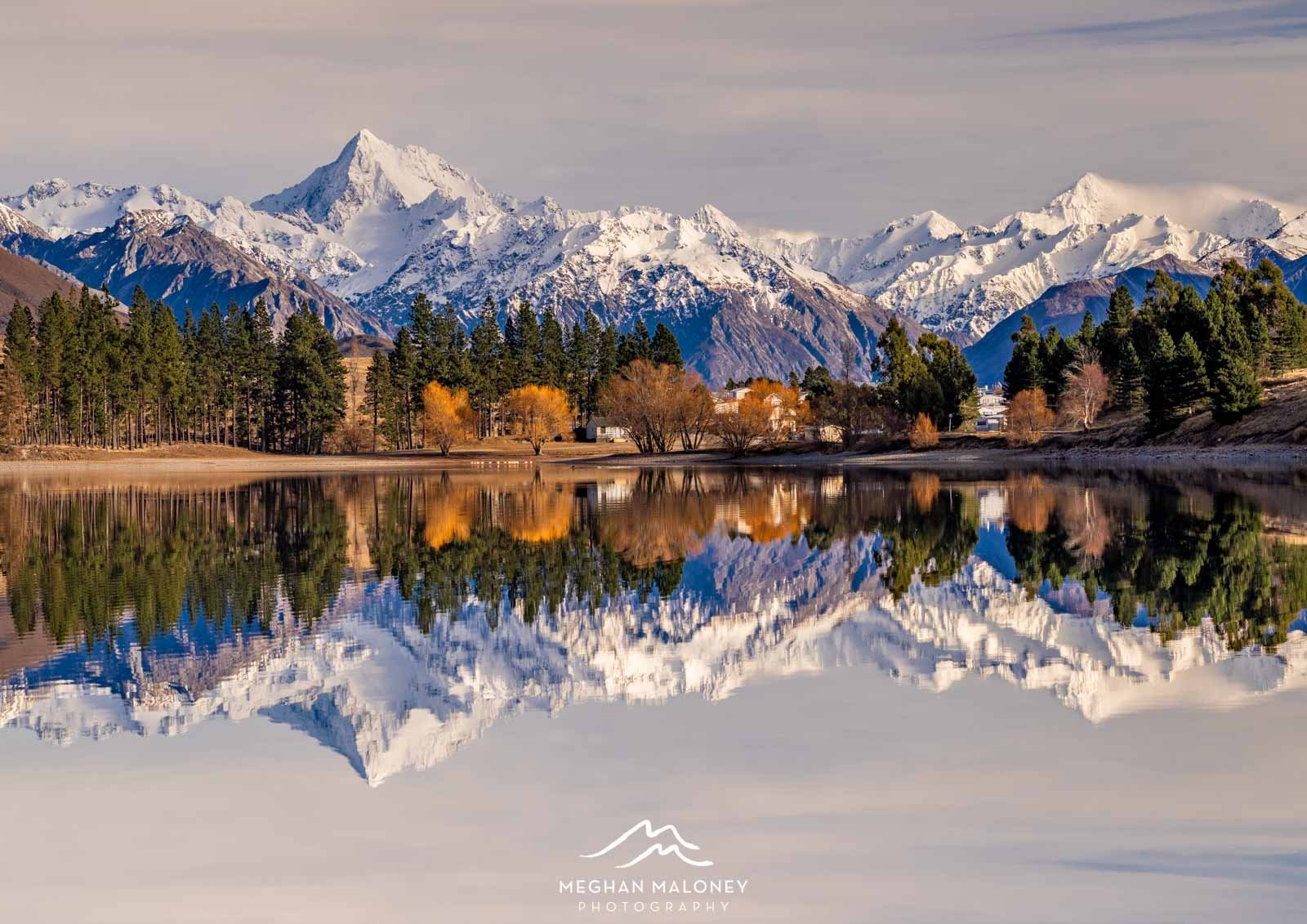
Shot at 168mm to bring the peaks of the mountains more into frame as subject
Another thing that zoom lenses are useful for is to really accentuate the subject you are shooting and to blur the background behind allowing you to shoot quite discreetly while still quite far away. While this is not so important for landscapes it can come in very handy for portraits, weddings and nature images like these below.

Shot at 170mm at f5.6 allowing the subjects to be sharp but the background to be blurred - Lake Karapiro Wedding

Shot at 300mm - a bee on lavender with bokeh and blurred background
When to use different focal lengths
There's no right or wrong when it comes to which lens you should use in different situations. Ultimately you need to train your eye to know what you want to include in your scene and that might mean changing your lens several times during a shoot at the same location.
Train yourself to ask:
What is the subject?
What should dominate the frame?
Do I want expansion or compression?
Do I want immersion or isolation?
Then choose your focal length accordingly.
At a single location, you might shoot:
Ultra-wide for foreground drama
Mid-range for balance
Telephoto for graphic impact
Different focal lengths = different stories. Don’t shoot with just one lens, make sure you explore all three.
To illustrate this, check out the different compositions that can all be found in one location at Lake Matheson using a wide-angle lens right through to fairly long crop using a telephoto zoom.

Each shot has its own appeal - personally I prefer the shots taken at 70mm and 239mm in this instance. The 70mm length still allows for reflections in the water which Lake Matheson is well-known for, while the 239mm length allows the mountain peaks to be the star of the show.
What about prime lenses?
Primes absolutely have a place, and especially wide primes like 14mm, 20mm or 24mm for astrophotography and extreme low-light work with apertures between f/1.4 and f/1.8.
They offer:
Wider apertures
Excellent sharpness
Better night performance
But they do reduce flexibility. You can’t zoom with your feet if there’s a cliff, lake, or drop-off behind you. And sometimes my 16-35mm f/2.8 will suffice for astrophotography depending on the situation.
So, for most landscape photographers, zoom lenses are FAR more practical.
What should you buy?
I hope that you've found this post useful to help you decide what lenses will be ideal for your landscape photography.
If I had to pick one lens only, it would be the 24-70mm lens because it covers a good range of situations, especially for travelling.
But the more you shoot, the more you'll know what focal lengths suit your style and images best.
If you enjoyed this post, also check out: