Sony Alpha 7R VI Review: The Ultimate All-Rounder? (vs A7R V, A7 V & A1 II)
This camera will give you wings!
This was my constant feeling after taking the new Sony Alpha 7R VI camera through its paces over the past two weeks, ahead of the offical global launch date on 13 May 2026. I’m primarily a landscape and astrophotographer but I also shoot wildlife (I’ve spent 3 seasons working in Antarctica with a 4th trip planned in 2027) so having a camera that can do EVERYTHING rather than having to run 2 separate models for two different purposes feels like I’ve reached the holy grail!
I was impressed with the a7R V back when it was released in October 2022, because it introduced brand new features that I loved such as the the 4-axis articulating/tilting screen, a new menu system, focus bracketing and an in-built bulb timer - and I can hand on heart say these are features I personally have LOVED using over the past 3.5 years, they’ve been a game changer for my work! Fast forward to today, and developments in technology have moved on in leaps and bounds on all Sony models released since then, most notably in sensor improvements and the ability to capture fast action much more accurately with fully-stacked sensors, improved AI tracking, and pre-capture.
So what does the new Alpha 7R VI have to offer photographers, and how does it compare to the current a7R V, the relatively new a7 V and the a1 II? Let’s dive in and see.
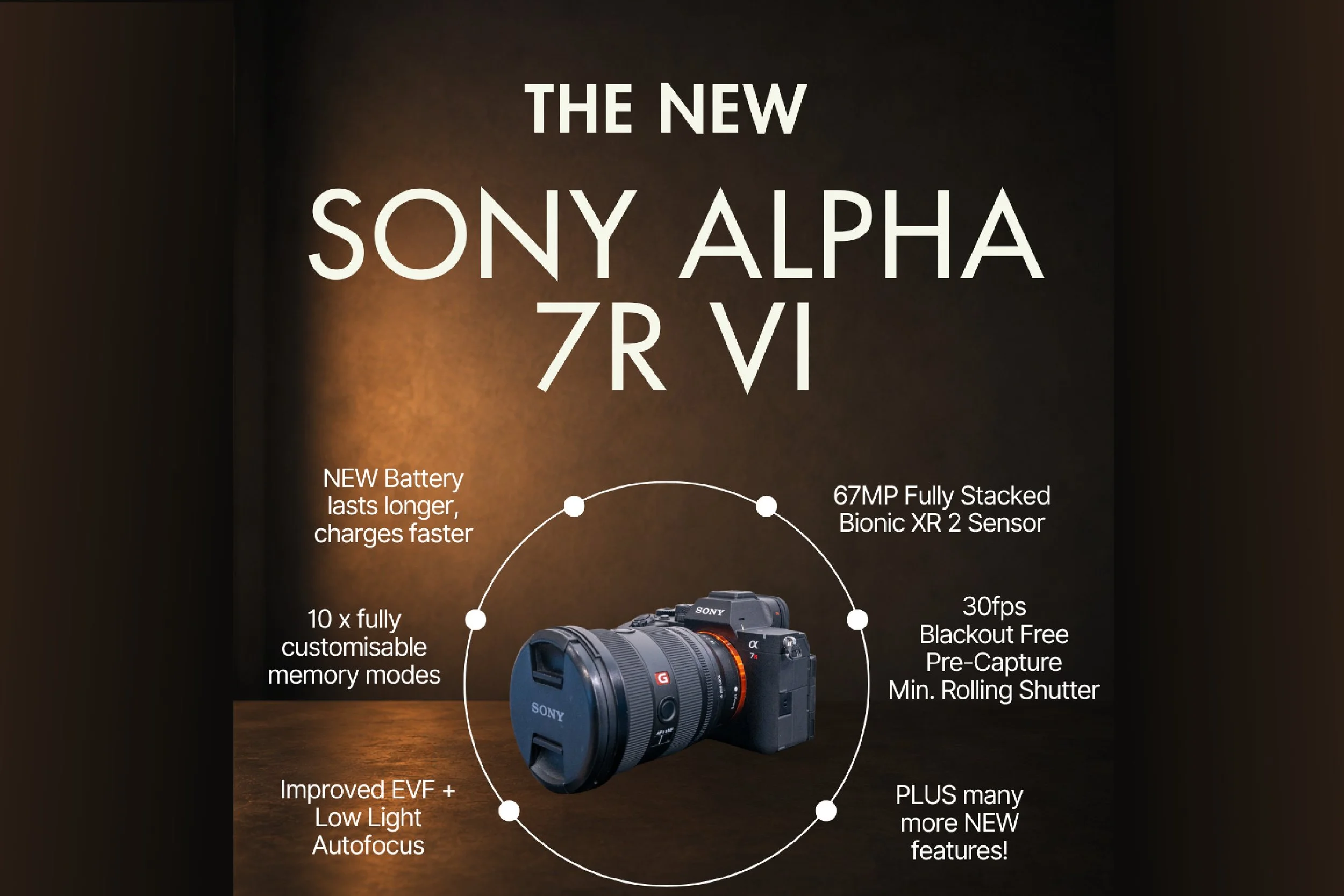
Alpha 7R VI Brand New Features & Specs
67MP (NEW) - 10% bigger than the a7R V (61MP)
Bionic XR 2 Fully Stacked Sensor NEW (a1 II has version 1 fully stacked sensor, a7 V has version 2 - not fully stacked)
30fps (10fps a7R V ) fps with blackout-free viewing + full AF/AE tracking - 60 calcs per second (120 on the a1 II)
Pre-capture + Continuous Speed Boost (also on a1 II + a7 V)
759 point phase-detection AF (vs 693 on the a7R V)
16-stop dynamic range (15-stop a7R V)
8.5 steps image stabilisation (8 steps a7R V)
Touch screen settings (also on a1 II, a7 V and on a7R V with Ver 4.0 firmware)
New Focus Areas - XS Spot NEW (a1 II, a7 V), XL Spot and Custom Areas (a7R V Ver 4.0 firmware)
10 x customisable (including names) in-camera memory modes using * dial function NEW
Histogram & Level available on same monitor display, Level also available in EVF beside settings (a7 V)
NEW RAW format HQ, 3 RAW options available - Lossless Compressed, HQ and Compressed (a7 V)
NEW Illumination Light - lights up camera’s back buttons in the dark
Improved Autofocus in Low Light (plus Autofocus when combining Bright Monitoring for Astro)
NEW Tally Light - know when you’re recording
3x brighter Electronic Viewfinder than a7R V + wider colour gamut
Improved Power Save Functions for Monitor/Viewfinder (also on a7 V)
NEW Battery 590 shots (vs 440 a7R V) together with bigger battery capacity & faster charging (2670 mAh vs 2280 mAh, 85 mins for 1 battery, 115 min for 2, vs 155 mins old charger) plus NEW Battery Health indicator
While all these specs might be a lot take in, let’s just simplify things with this statement:
It seems the Alpha 7R VI basically has THE BEST FEATURES of the a II and a7 V combined, PLUS the biggest resolution of any Sony camera at 67MP, a brand new battery system, and some cool new features to boot - including 10 memory modes, handy lights, and a much better EVF.
HERE’S WHAT I’VE NOTICED AFTER A WEEK WITH THE ALPHA 7R VI
Before I begin, a disclaimer! There aren’t currently any editing programmes that can read the Alpha 7R VI’s RAW files since it hadn’t been officially released while I was testing, so whilst I have been shooting in RAW, I can’t yet edit the files so I’ve had to rely on JPEG files, I’ll be sure to update this post once I can actually edit the files I took!
1) THE ALPHA 7R VI SHOOTS SUPER FAST AND ACCURATE!
Since I’m only a part-time wildlife photographer, I hadn’t really thought I would necessarily need 30fps in a camera other than for my trips to Antarctica - but how wrong I was! I’ve taken this pre-release opportunity to put the camera through its paces, firstly by shooting an entire 90 minute football match with the 200-600mm. It was actually my first time using the 200-600mm for sports, I’ve only had the lens since late last year, and I was seriously impressed that I had almost NO missed shots compared to what I’d normally expect for this type of shooting on the a7R V, but bear in mind I haven’t tested the a1 II or a7 V for comparisons. However, on the Alpha 7R VI I found the Human AF + Tracking worked a charm and I found it pretty much ALWAYS got the right player I wanted in focus, plus managing to catch some really great pivotal moments in the games - like capturing most of the goals, this one below was quite entertaining!
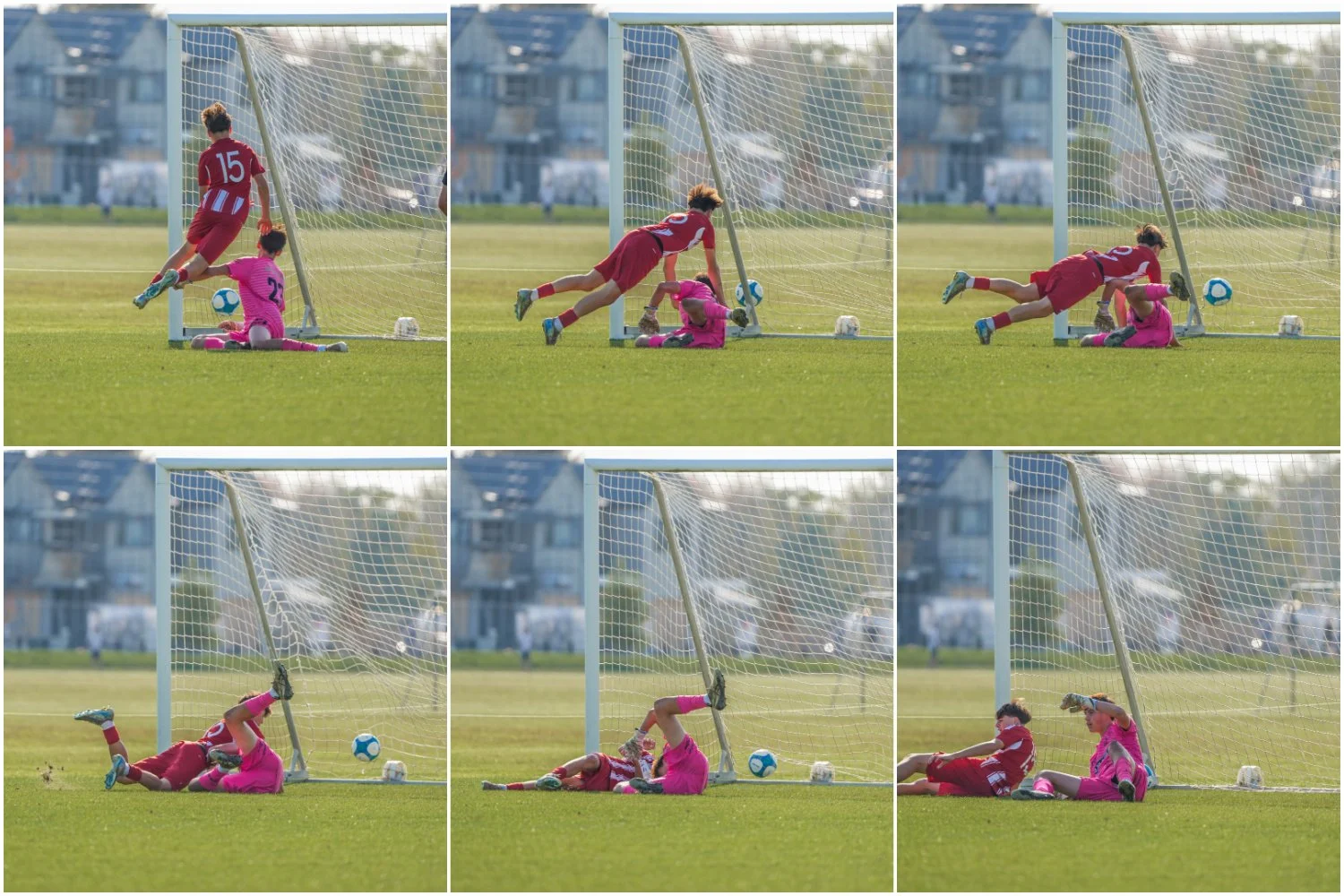
GOAL! Plus a little extra acrobatics from the goal scorer and goalkeeper
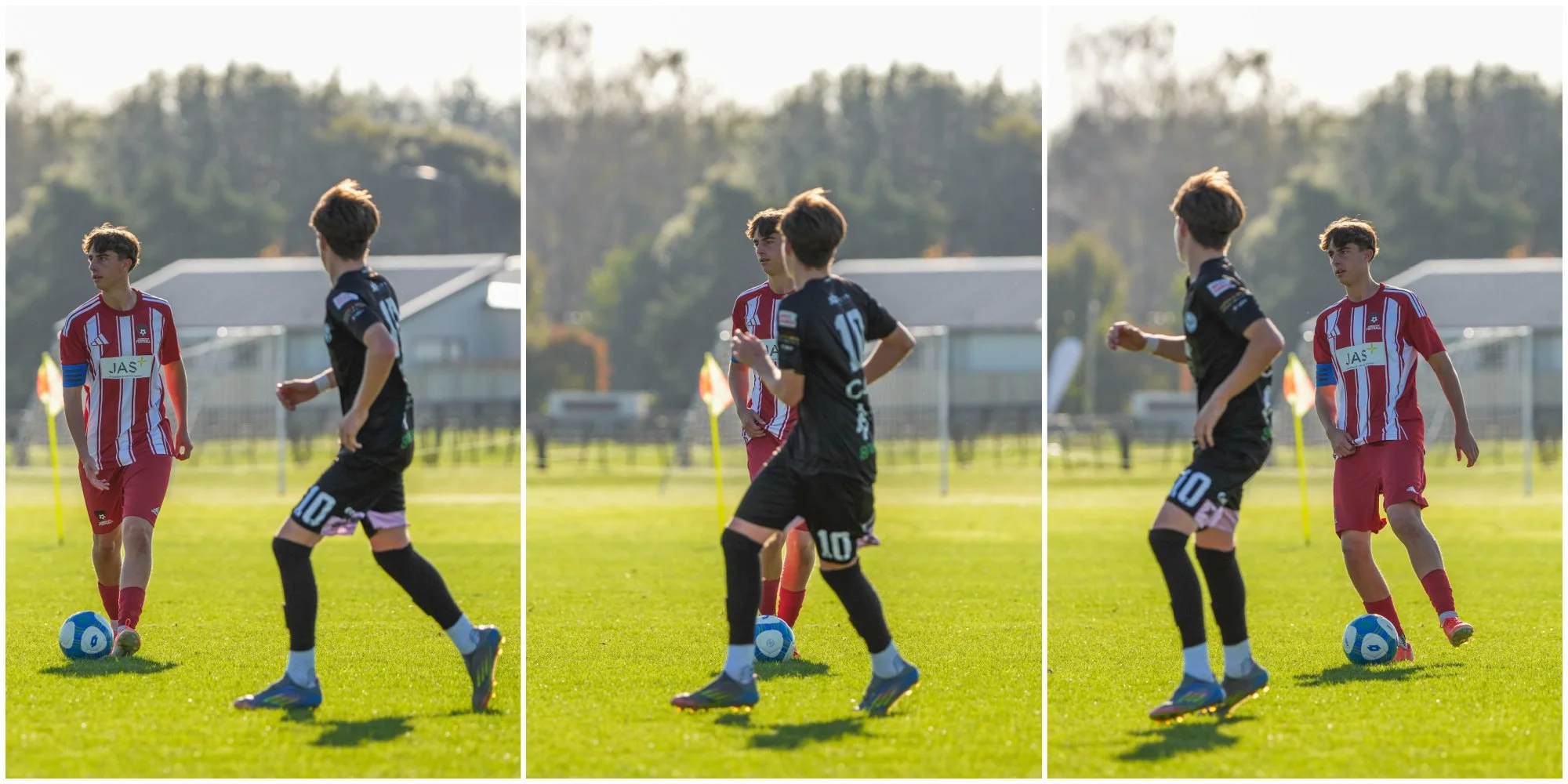
These are just 3 from a much longer burst sequence where the camera nailed the back person focus without swapping when the player ran in front.
On another morning shoot, I managed to get some great shots of fantails - if you know this bird, you’ll know just tiny and erratic their movements are, and therefore HARD to capture! The fantail images are quite heavily cropped since I initially went out to shoot a sunrise (which flopped!) and so I decided to shoot birds instead while I was there. Unfortunately, I had only taken my 70-200mm+1.4 teleconverter with me so I had to make do with cropping a lot for the final shots, BUT the beauty of having a bigger 67MP sensor now is that you can easily do this!
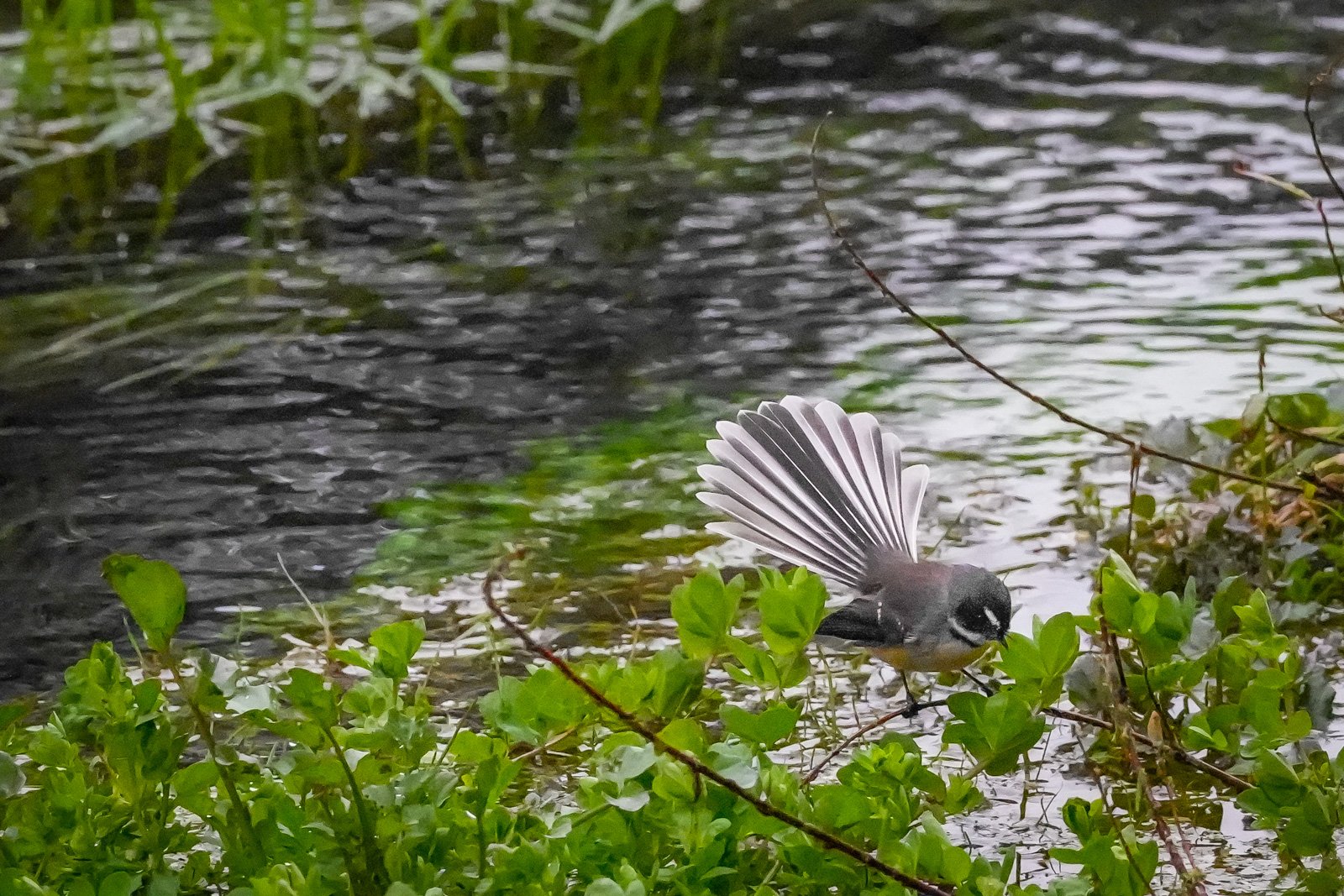
Crop of fantail on a branch
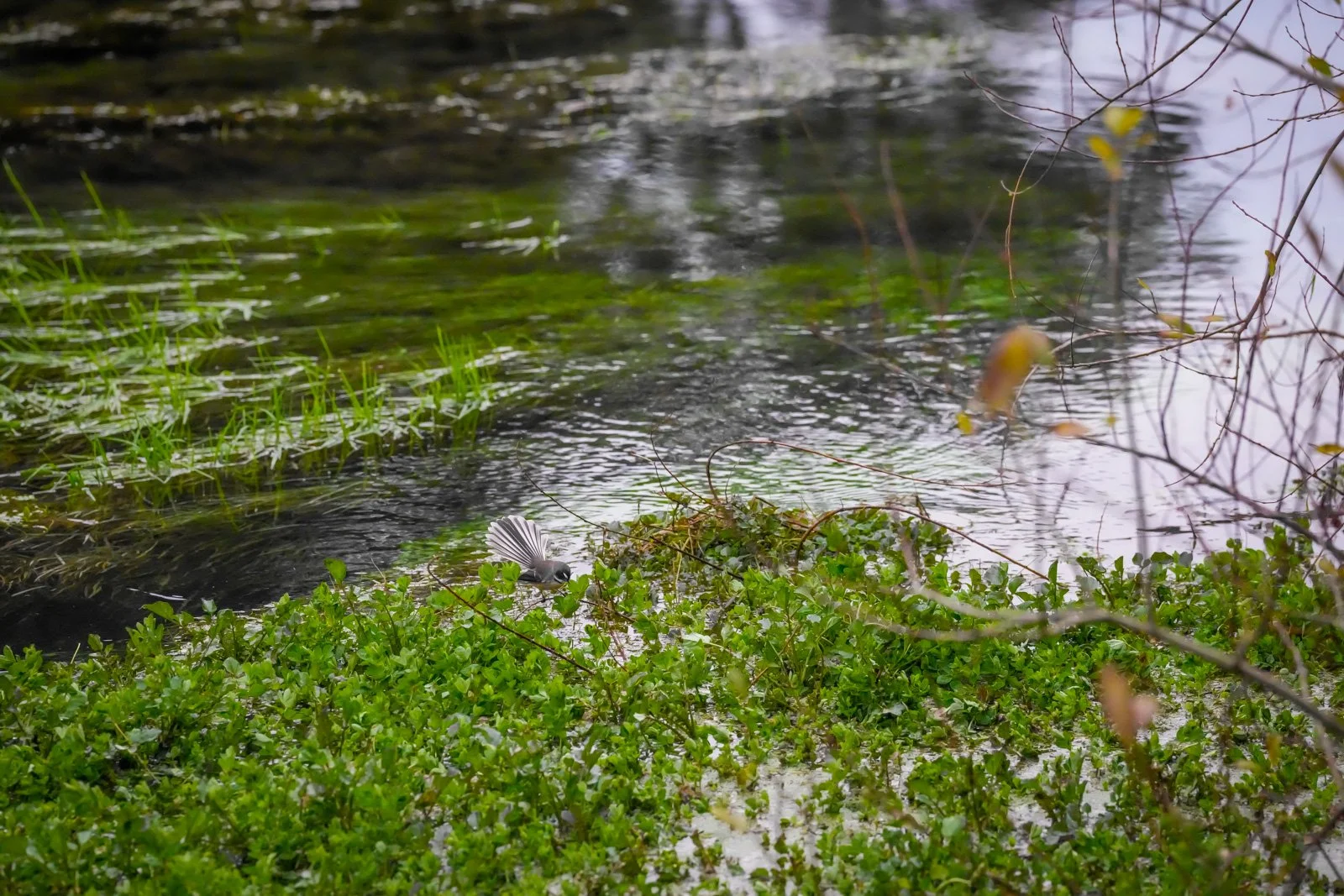
Original size of image
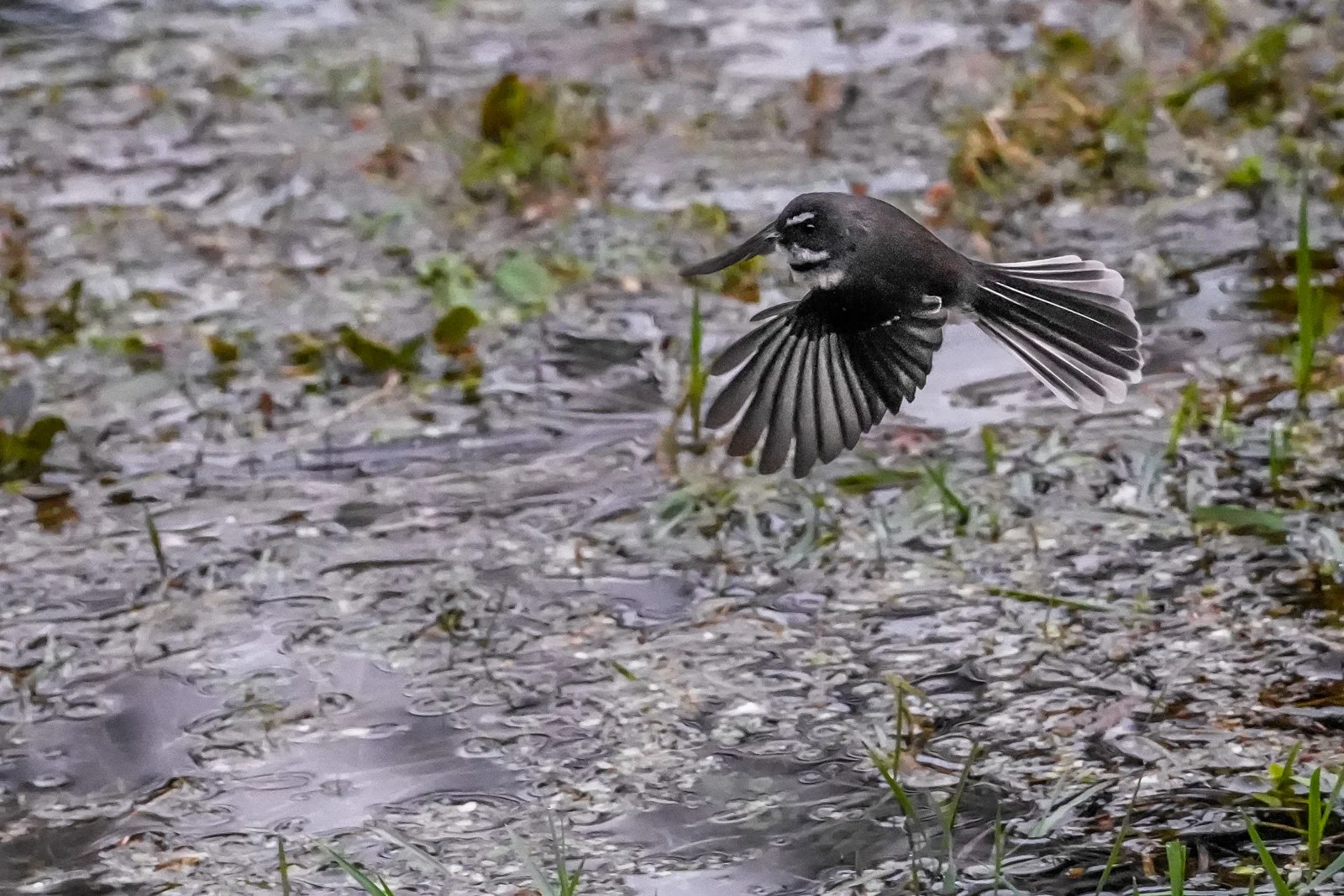
Crop of fantail in flight
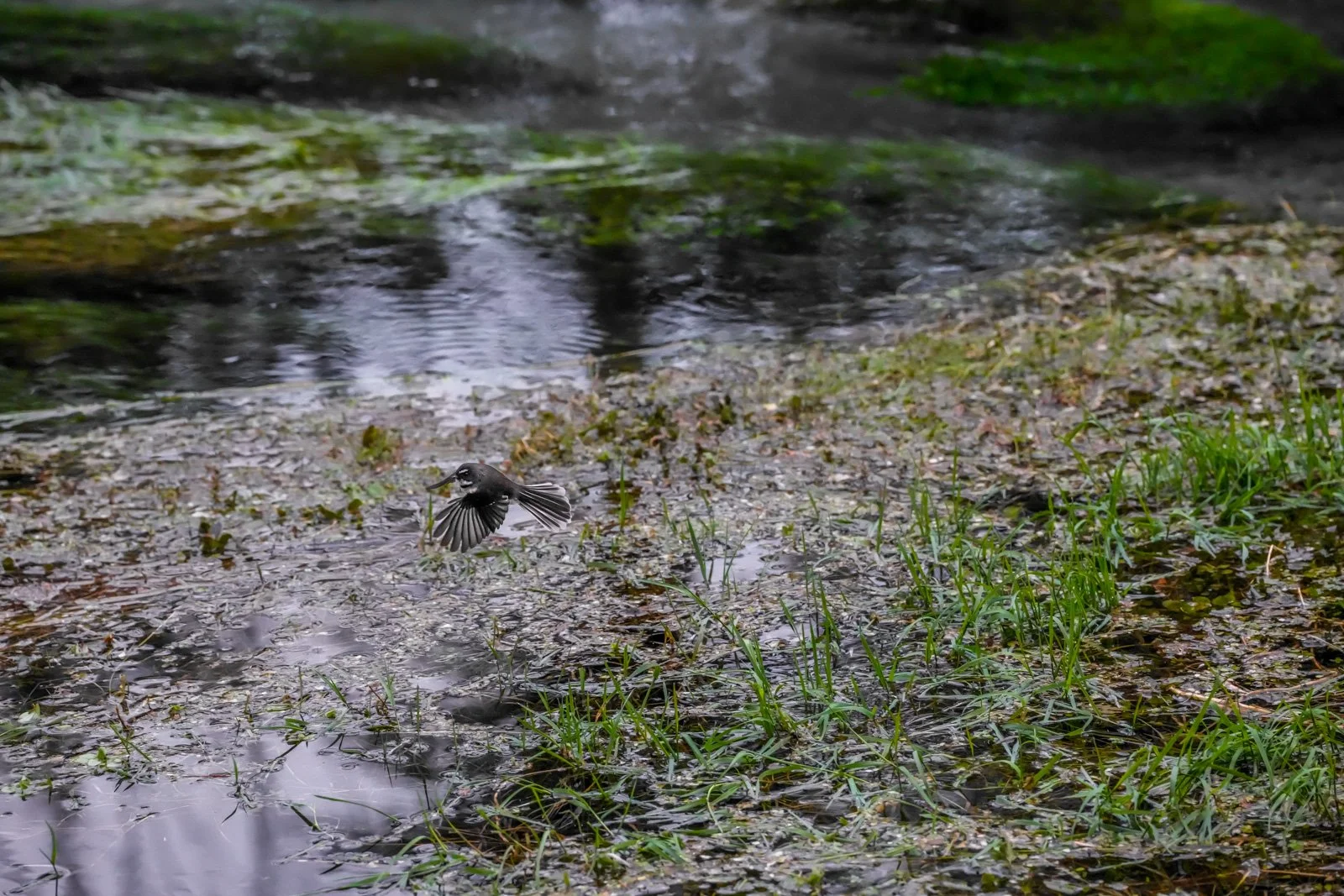
Original image size
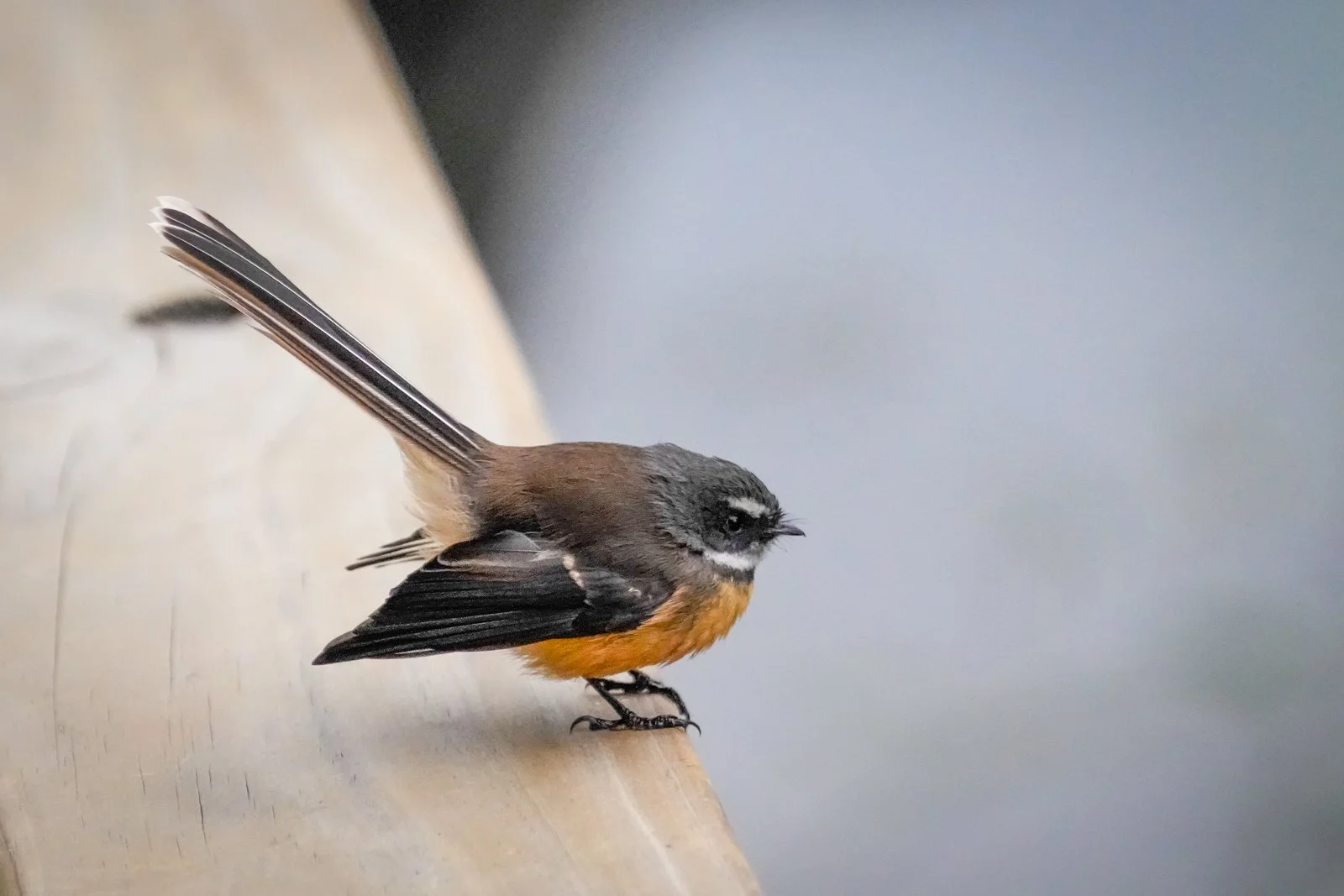
They are such sweet wee friendly birds - I mean what’s not to love?! Apart from how hard they are to shoot of course!
I actually tried my older a7R V as well while I was shooting the fantails to compare results. The difference was VERY obvious - not only with the 30fps speed vs 10fps, but also the black-out free viewing helped immensely with my success rate keeping track of where the fantails were going in real-time rather than having the lag I experienced with the a7R V between shots, making it pretty hard to keep up with where the fantails were flitting to next.
With both the football and fantail shoot, I also didn’t notice any rolling shutter, I have to say THIS problem drove me a bit mad in Antarctica last year when using my old a7R V for fast wildlife action - I mean who wants a bunch of skinny, elongated penguin photos at the end of a burst of photos ?! I did end up having to bin a fair few shots due to this.
Having the ability to use the new XS Spot Focus to isolate the fantail when hidden between branches was also super handy, and it was also quite obvious between the 2 cameras how much better the Alpha 7R VI was at keeping focus compared to the a7R V in a situation like this.
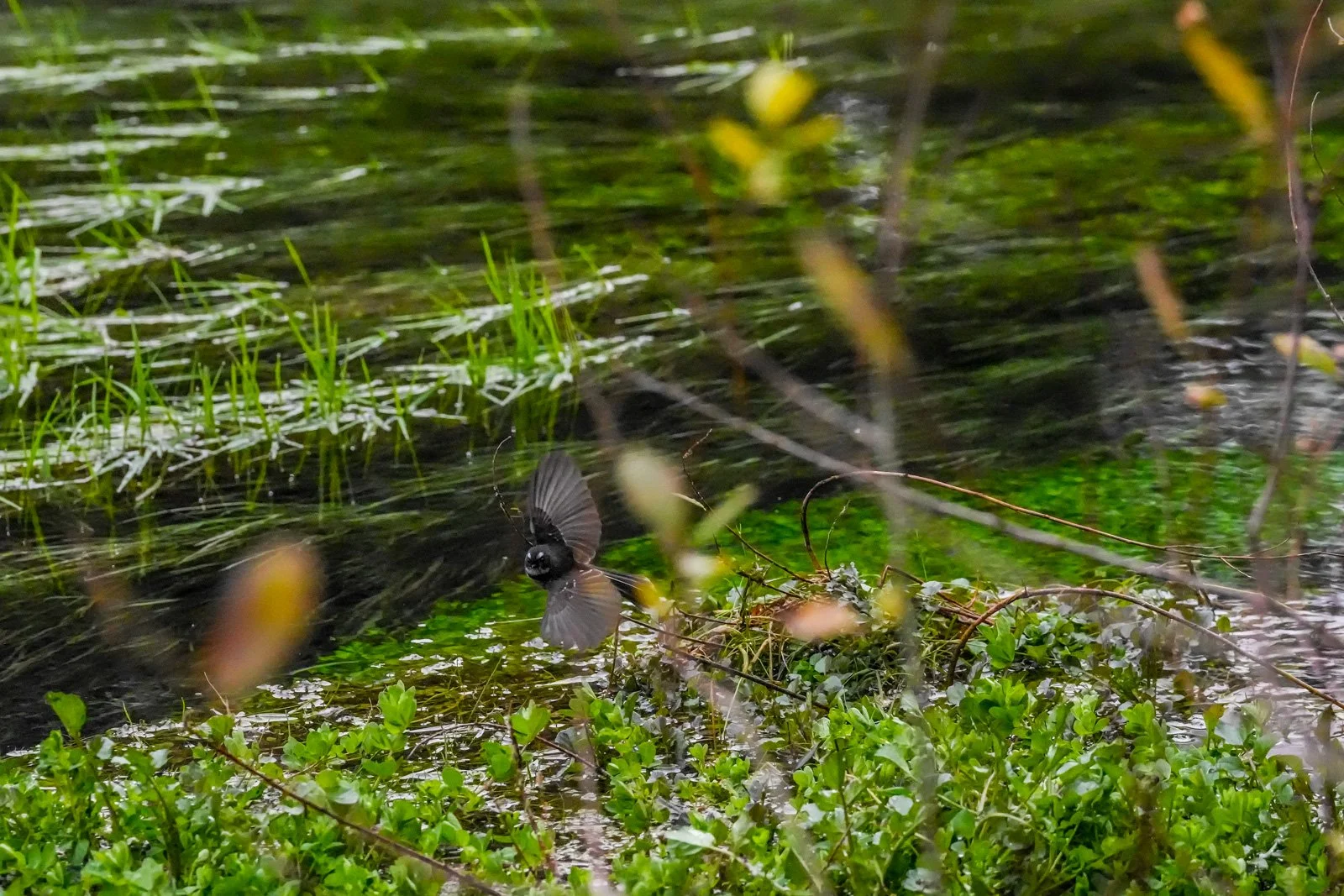
The Alpha 7R VI maintained focus despite the fantail taking flight from a busy scene with bushes in front
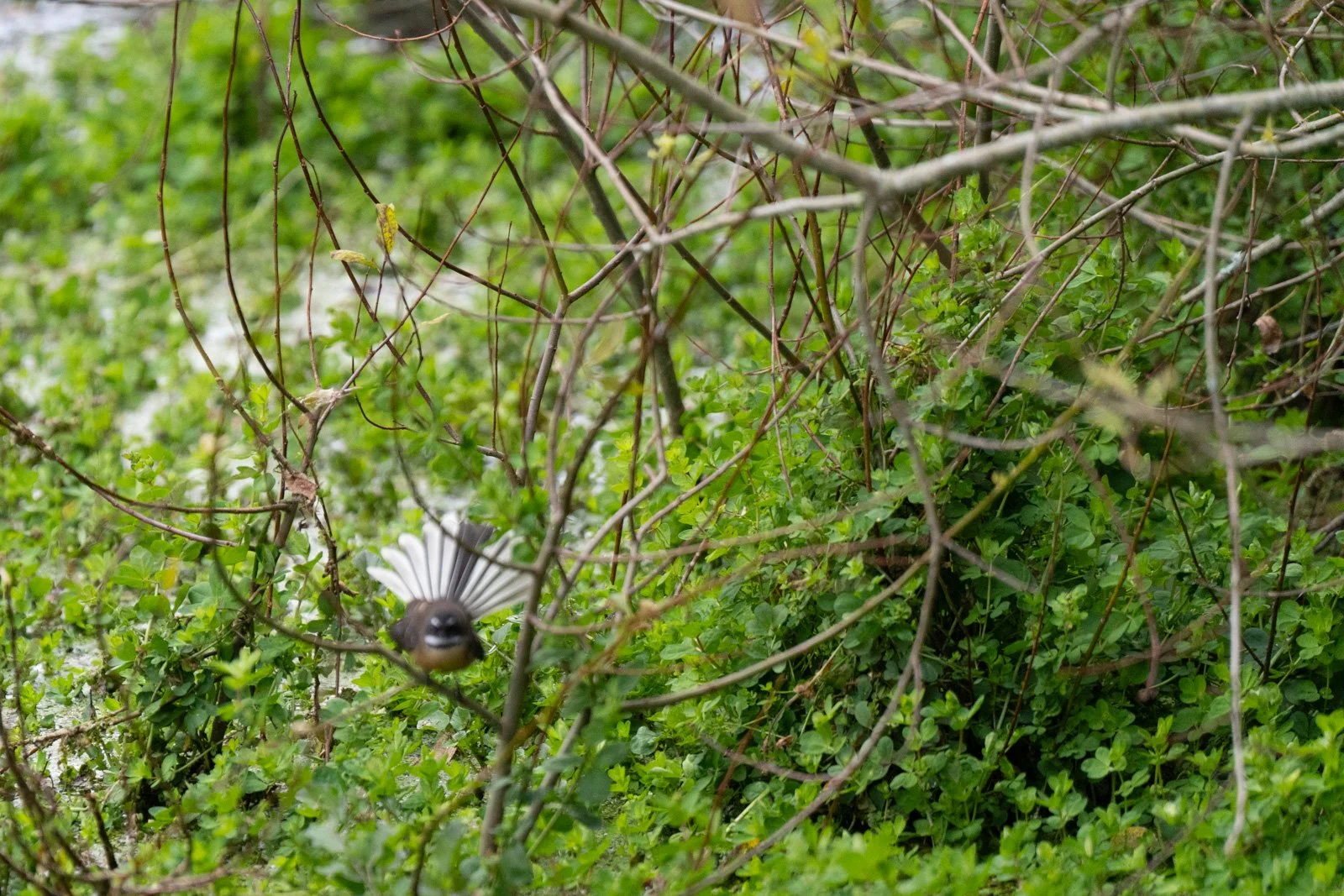
Whereas the a7R V struggled to lock on focus when the fantail was partially hidden in a busy scene behind the twigs.
Overall, I am SUPER excited about finally having a single camera that can do justice to all the faster photography genres I find myself doing, I stand by what I said at the beginning - this camera gives you wings!
2) THE EVF IS NOTICEABLY BETTER, ESPECIALLY IN LOW LIGHT
This is not that easy to show with example images, as I had to use my iPhone to get close enough to each EVF to take a photo, so you’ll have to take my word for this until you can see for yourself the difference (also noting it’s slightly more exaggerated in these photos than it is in real life), but…. there is far less speckly viewfinder noise in the Alpha 7R VI and it is especially noticeable in low light. The colours overall feel brighter and more vibrant too, officially the EVF is 3x brighter than the a7R V and it comes with a wider colour gamut too.
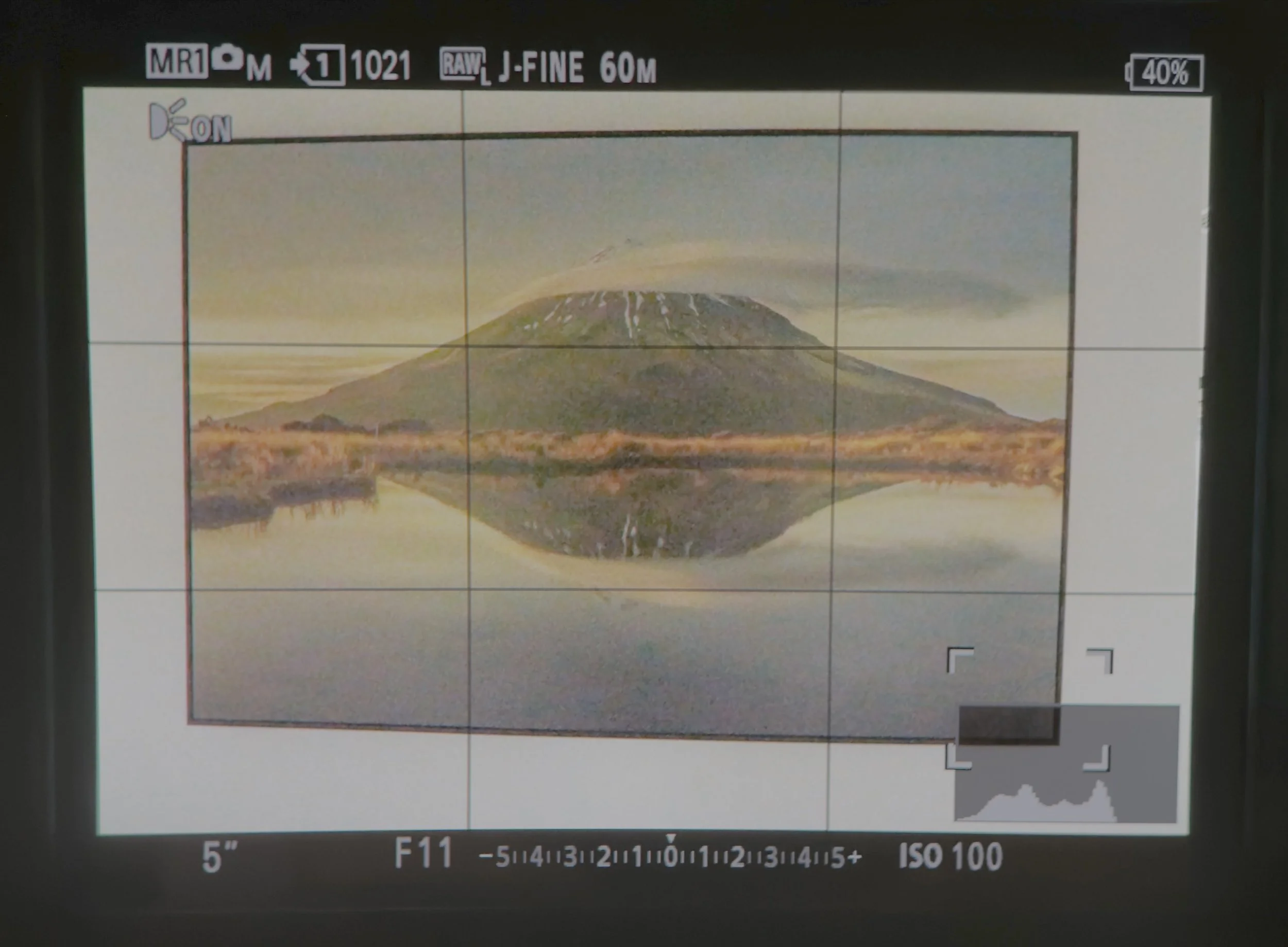
a7R V Electronic Viewfinder in low light
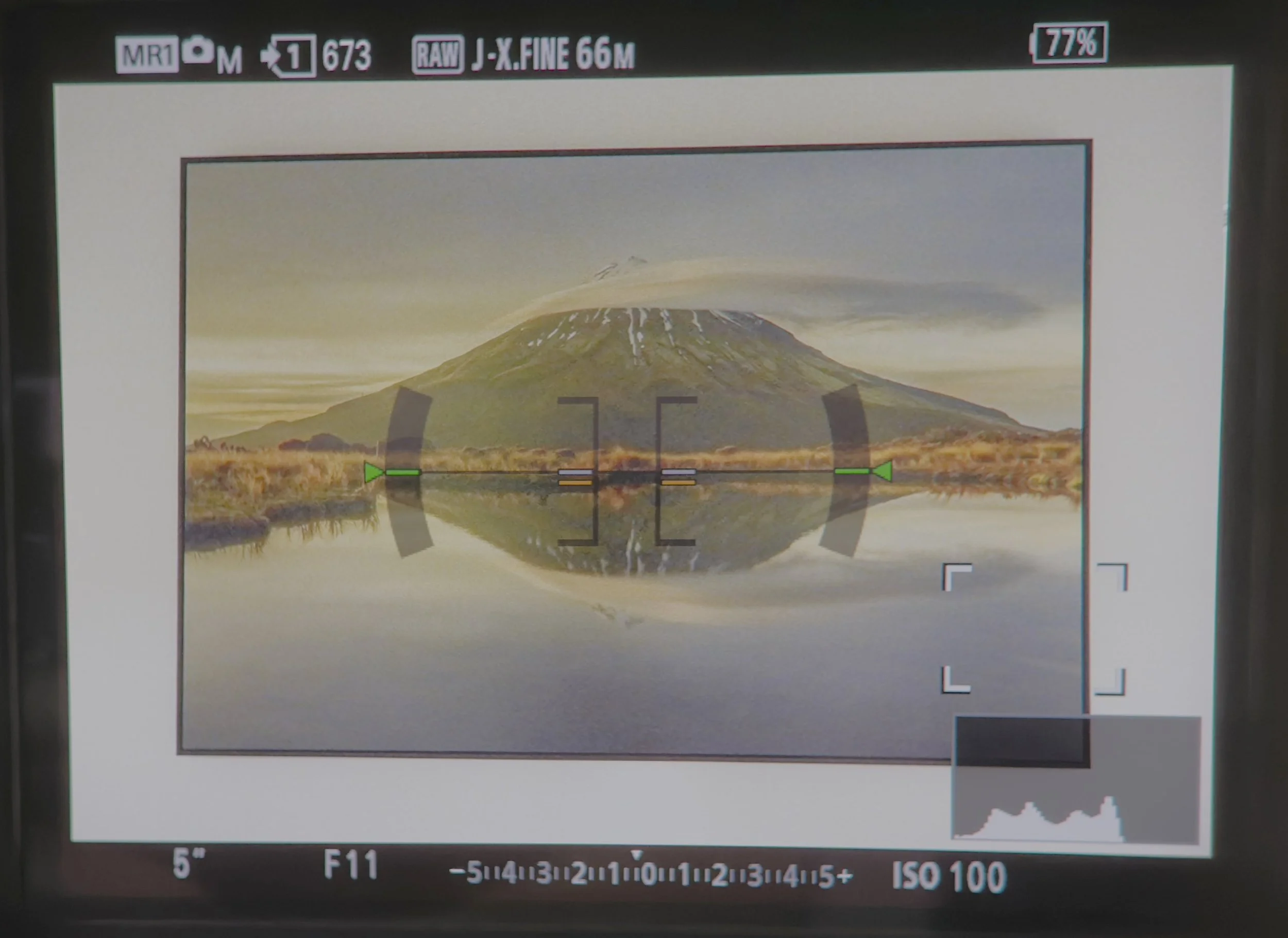
Alpha 7R VI Electronic Viewfinder in low light
3) THE NEW BATTERY DESIGN & PERFORMANCE IS SERIOUSLY GOOD
This is the FIRST full-frame Alpha camera to have the brand new SA100 battery, and it’s the first time we’ve seen a battery upgrade in almost 9 years, since the NP-FZ100 came out in late 2017. The new battery is practically the same size and weight but packs a way more powerful punch!
The official word on the number of shots you can expect is 590 vs 440 (a7R V) , but I know for a fact I have already taken far more than this on a single battery, and it also lasted noticeably longer than the one I put in my a7R V at the same time. I can also confirm that it is very fast to charge when it does run out (official word is 85 mins vs 155 mins for a single battery - almost twice as quick!)
The only downside is that I will no longer be able to share batteries between cameras - and I’ll have to carry 2 different chargers everywhere! I guess that makes a strong case for me to also upgrade to the VII when that model eventually comes out.
Another new feature is the Battery Health indicator - there is a new screen in the Setup → Power Setting Option that shows the health of the installed battery AND there’s also a button to do the same on the newly designed battery charger.
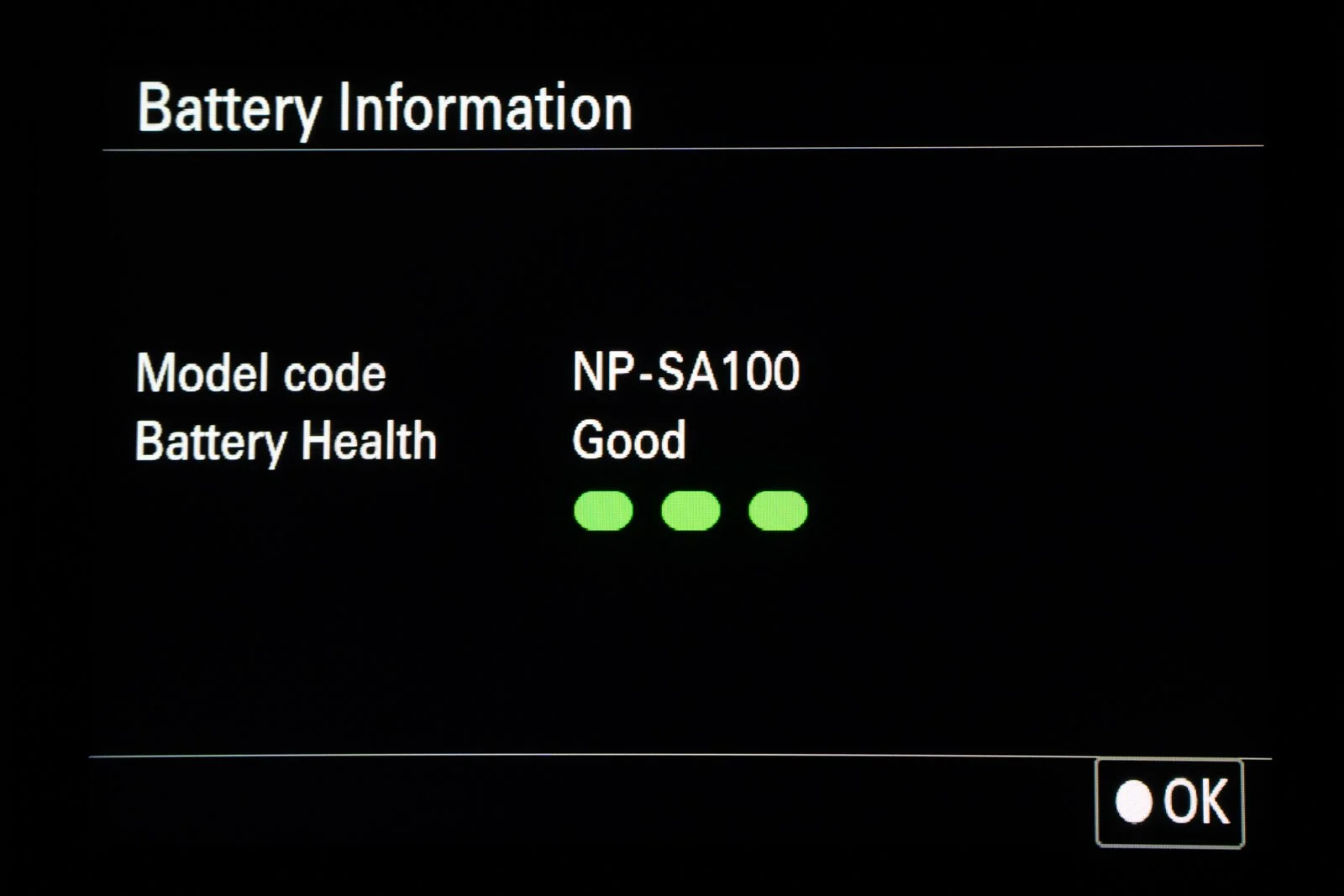
Sony Alpha 7R VI battery health indicator
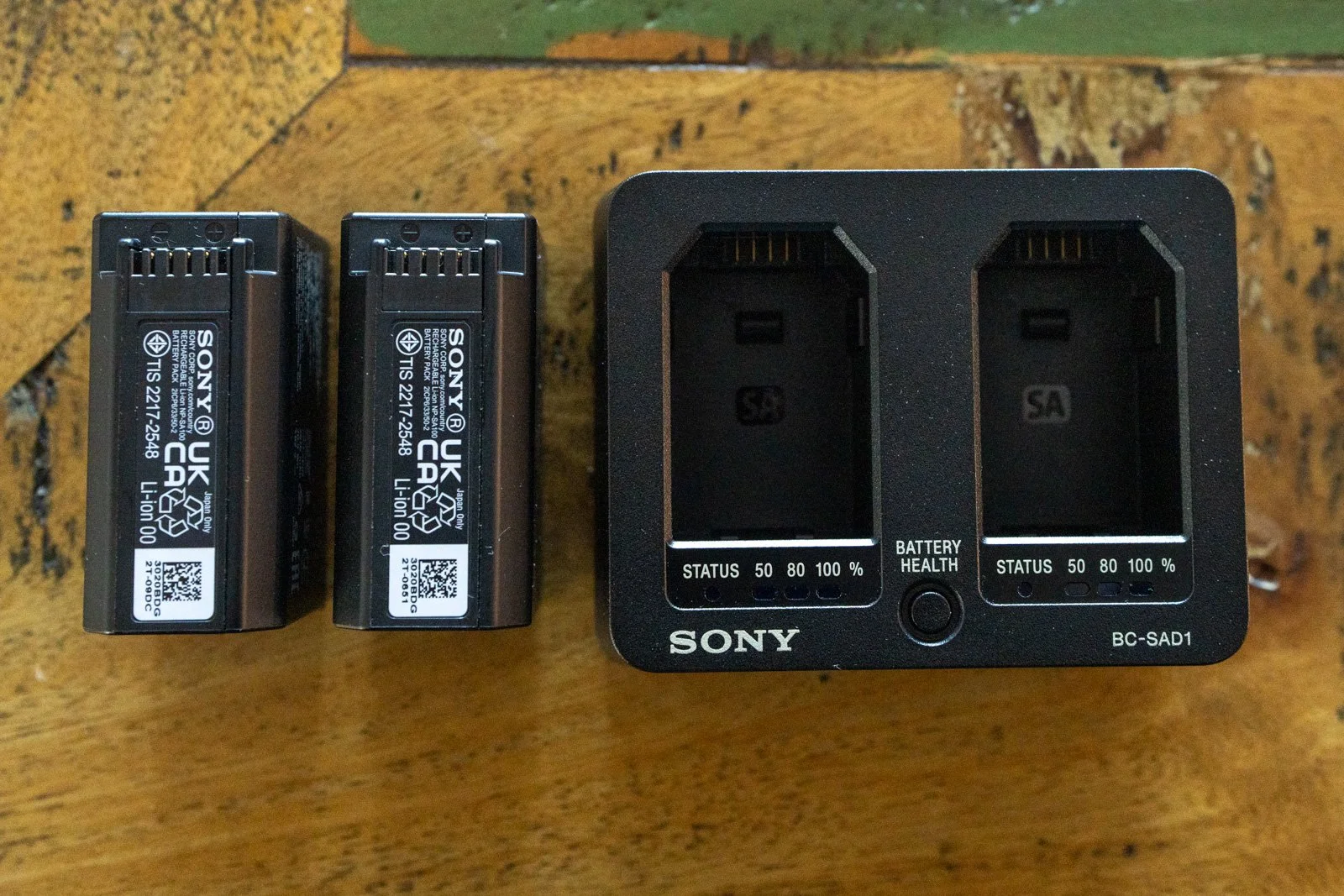
New Sony Battery with dual battery charger
4) FINALLY… A FEATURE I’VE BEEN WAITING FOR!
Sony shooters will identify with this - for years we’ve had to make do with the level and histogram being on different screen displays. This never made sense to me when neither take up much screen real estate, and I couldn’t imagine why they couldn’t be combined. I know I even mentioned this to some of the Sony Japan developers who asked me what I’d like to see in a new R model when we were chatting at the Sony AU/NZ Kando trip on the Gold Coast 2 years ago. Well…. hoorah! One of the new screen display options is Histogram + Level - I straight away went into the menu and turned off the other 2 display options where they appear separately…. it’s such a small detail but it does make me very happy after wanting this for years!
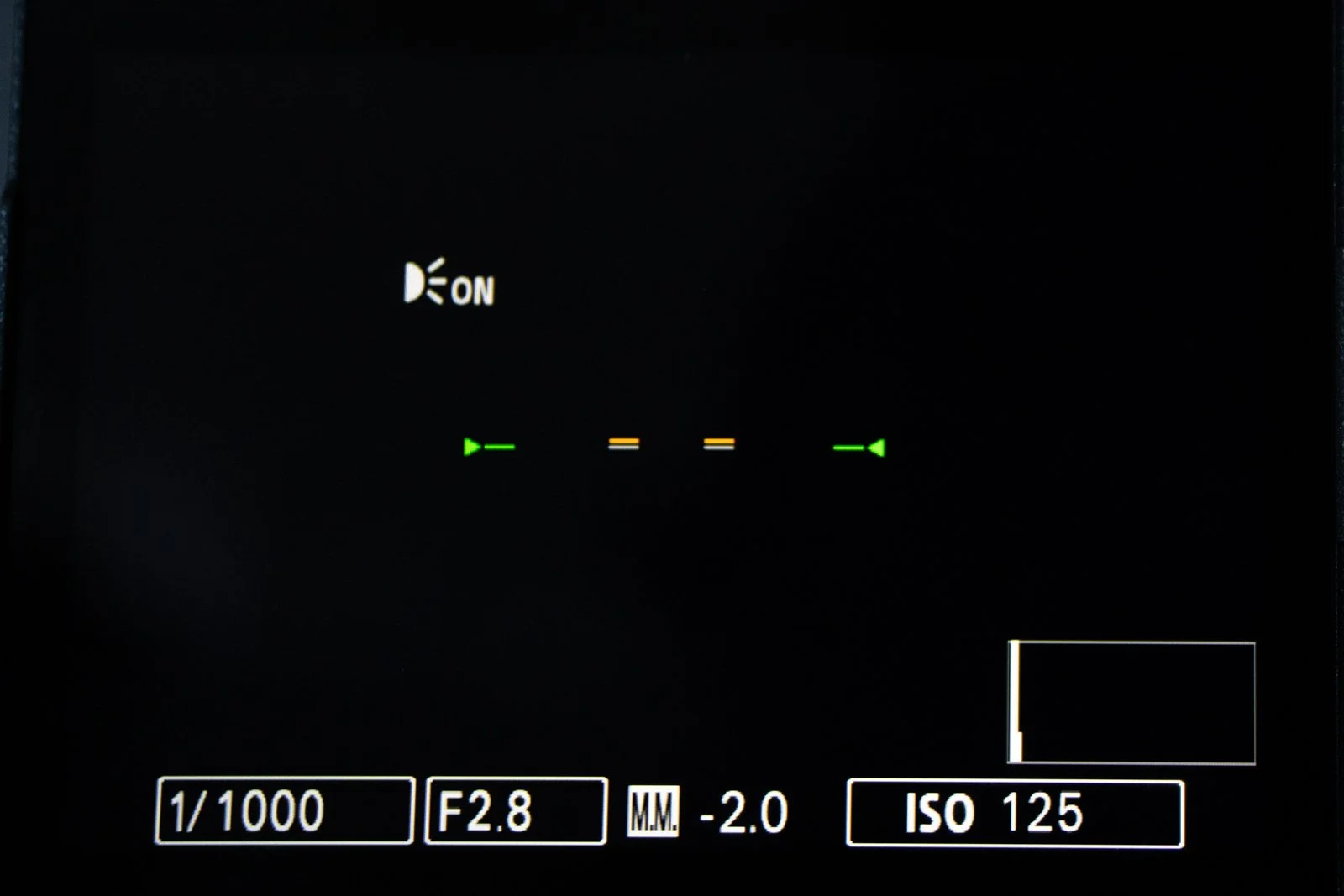
Sony Alpha 7R VI combined histogram + level screen display
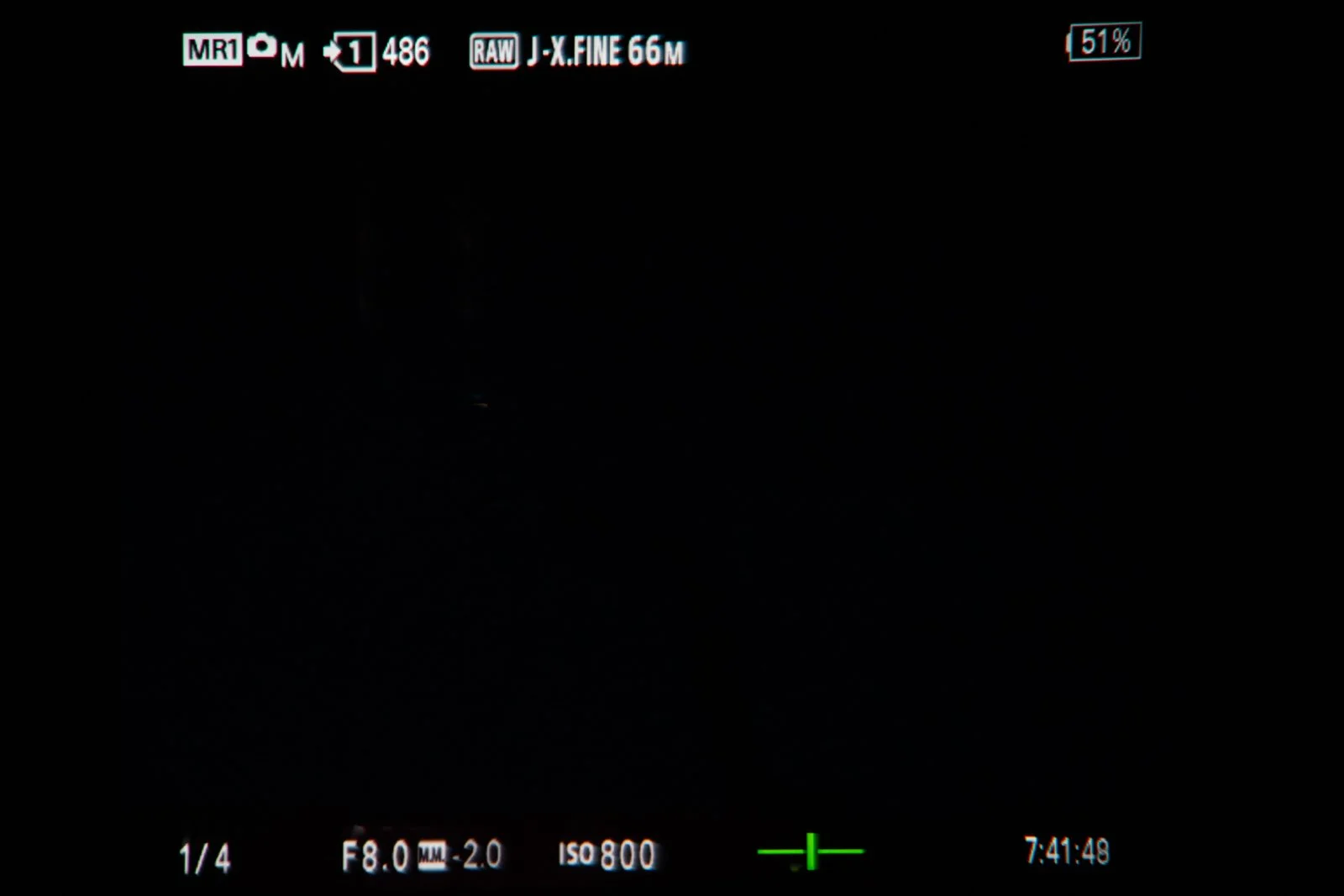
Additional Sony Alpha 7R VI electronic viewfinder level
There’s also a NEW level feature in the EVF that sits beside your core camera settings at the bottom of the screen, which is a nice addition too.
5) PLUS….. THE EXCELLENT FEATURES I DIDN’T KNOW I NEEDED!
1) MORE MEMORY MODES THAN YOU’LL EVER NEED!
I’ve always used the memory modes on my cameras and I find them super handy, usually I’ve had these set to #1 Landscapes, #2 Astro, #3 Fast Action. The Alpha 7R VI takes this a huge leap forward with the new ‘*’ mode on the dial next to Memory Modes 1 & 2, this is where you can programme and rename up to 10 memory modes for each setting (photo, video, S&Q) so you could have up to 30 separate modes, which is a lot!
I am definitely looking forward to having more than 3 modes - for example, I’ve also always thought it would be nice to have some default long exposure settings so that you can quickly switch into 1 minute long or 2 minute long exposures plus differentiate between different types of astro - and this has allowed me to do just that!
The ten Memory Modes I immediately came up with were: #1 Landscape Handheld, #2 Long Exposure 60 sec #3 Long Exposure 120 sec #4 Single Astro #5 Stacked Stars (20 shots) #7 Star Trails (10 min) 8# Fast Birds, #9 Sports JPEG, #10 Low Burst Action. I can only image how great it will be to be able to instantly change these, I’ve also assigned a custom key to be able to switch between all 10 x Shoot Modes quickly.
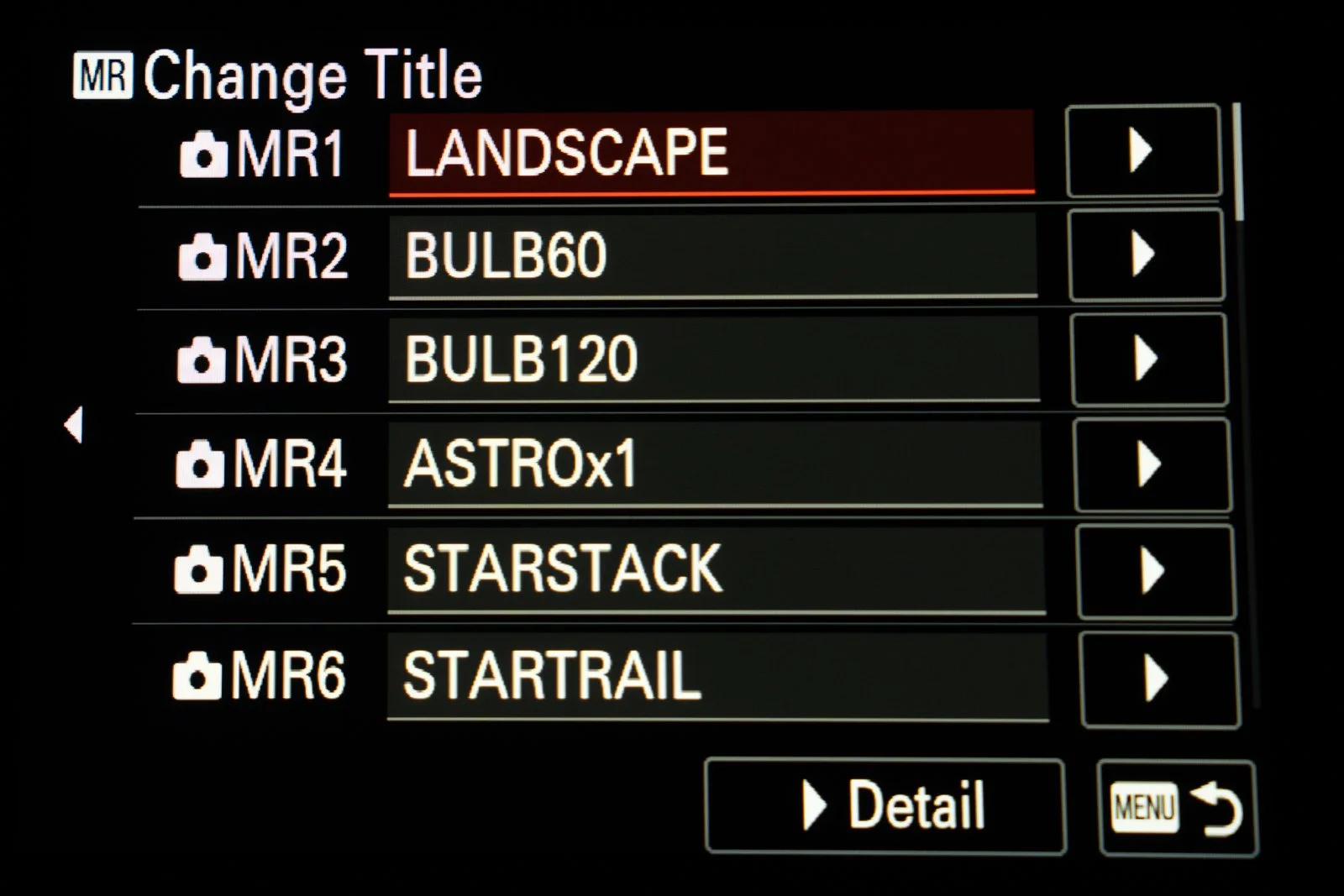
The new Sony Alpha 7R VI memory mode - up to 10 available
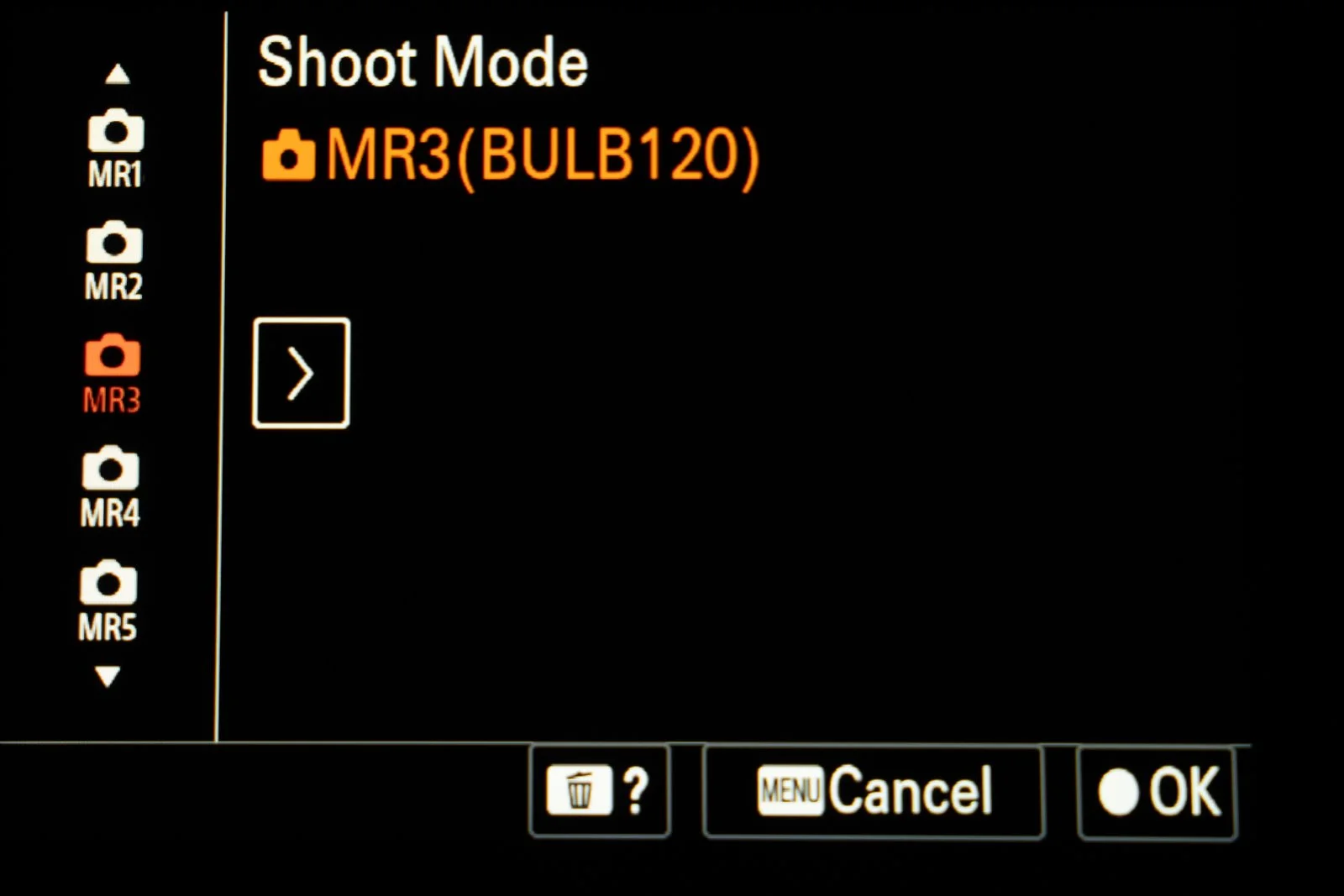
Using a custom key makes programmed Shoot Modes easy to access
2) DRIVE MODE LIMIT
This is a feature I didn’t know I needed, but I can see how handy it’s going to be. If you are a Sony shooter and you switch between single shoot mode and timer or fast burst mode, you will at some point have accidentally wound the mode back too far and ended up on WB or DRO Bracket without realising, and wondered why you’ve suddenly come home with 3 of the same shot!
This feature allows you to turn off any modes in the Drive Mode you don’t use - so straight away I’d remove Single Bracket (I always use Continuous) and the WB and DRO bracket options at the bottom which I also never use, you can also restrict how many Continuous Shoot options you want available.
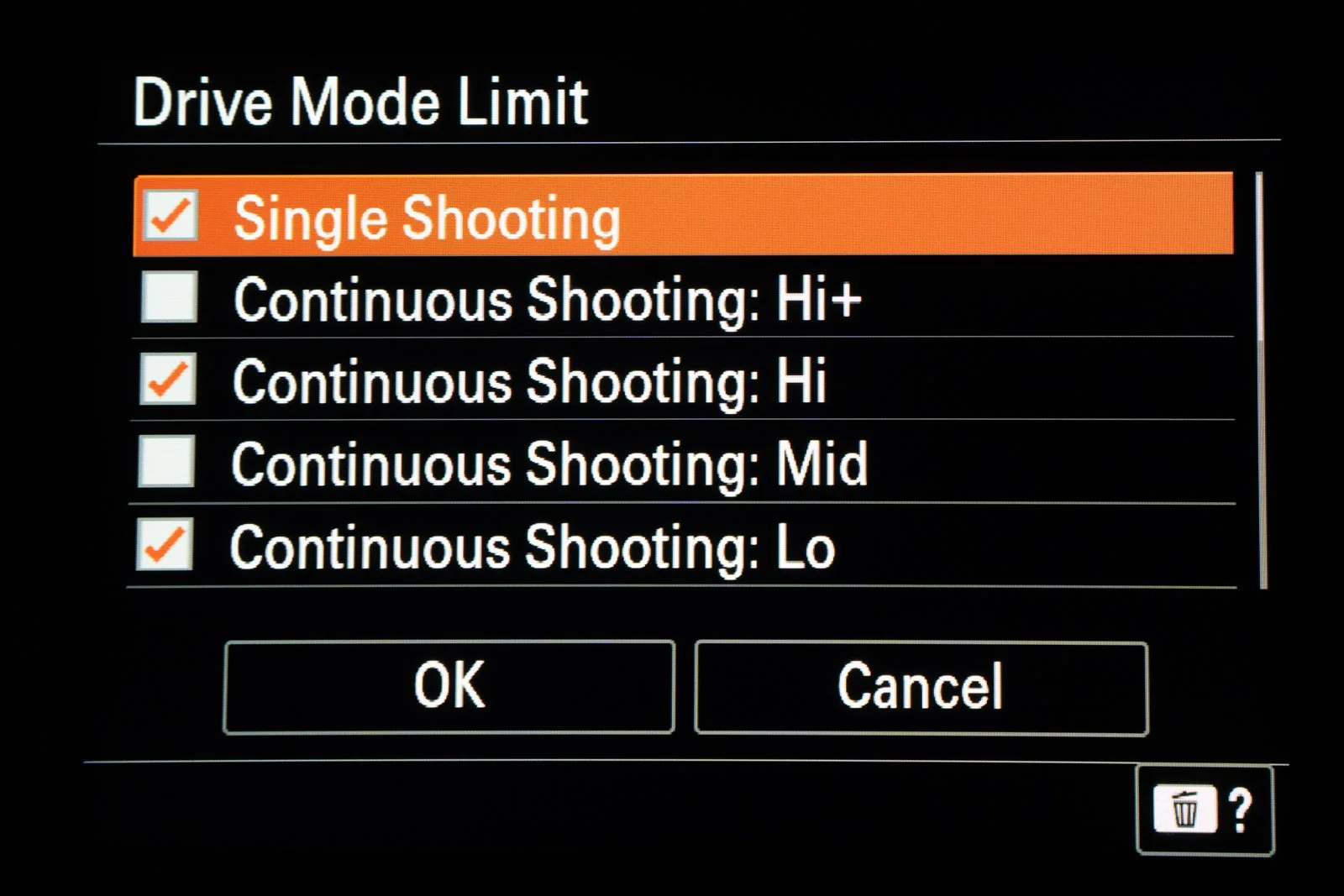
Example: remove the drive modes you don’t need
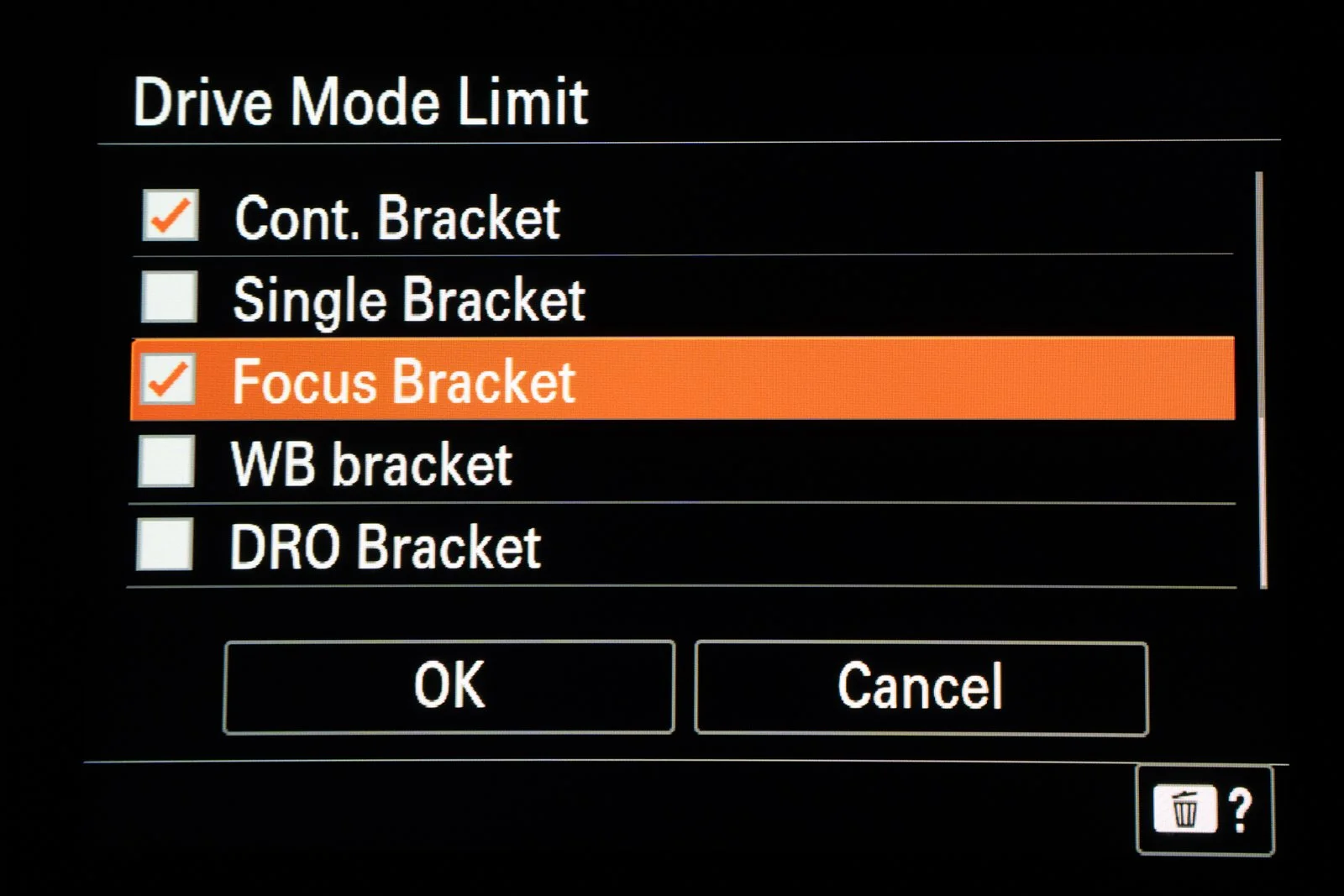
Does anyone ever use those WB & DRO Bracket modes?!
As an aside did you know you can also do this with the Focus Area Limit feature too - also handy when there are settings like Center that you might never use (or the new Custom Areas), or you can also limit how many different size Spot Focus options you want displayed as well.
3) BRIGHT MONITORING WITH AUTOFOCUS SETTINGS
Bright Monitoring has always been one of my favourite, handy features on the Sony Alpha cameras when shooting Astrophotography. Basically it brightens up your screen to the point where you can actually see the Milky Way or any night scene on the screen making it far easier to get your composition right without having to take a bunch of wasted test shots moving position. One of the more recent firmware upgrades on the a7R V (Version 3) also made it possible to use Bright Monitoring when using Manual Focus magnification on the stars. Well the Alpha 7R VI now takes it another step further making Bright Monitoring available with Auto Focus settings AF-S and AF-A, not just in Manual Focus. This means you can now actually use autofocus when out shooting the stars, talk about a game changer!
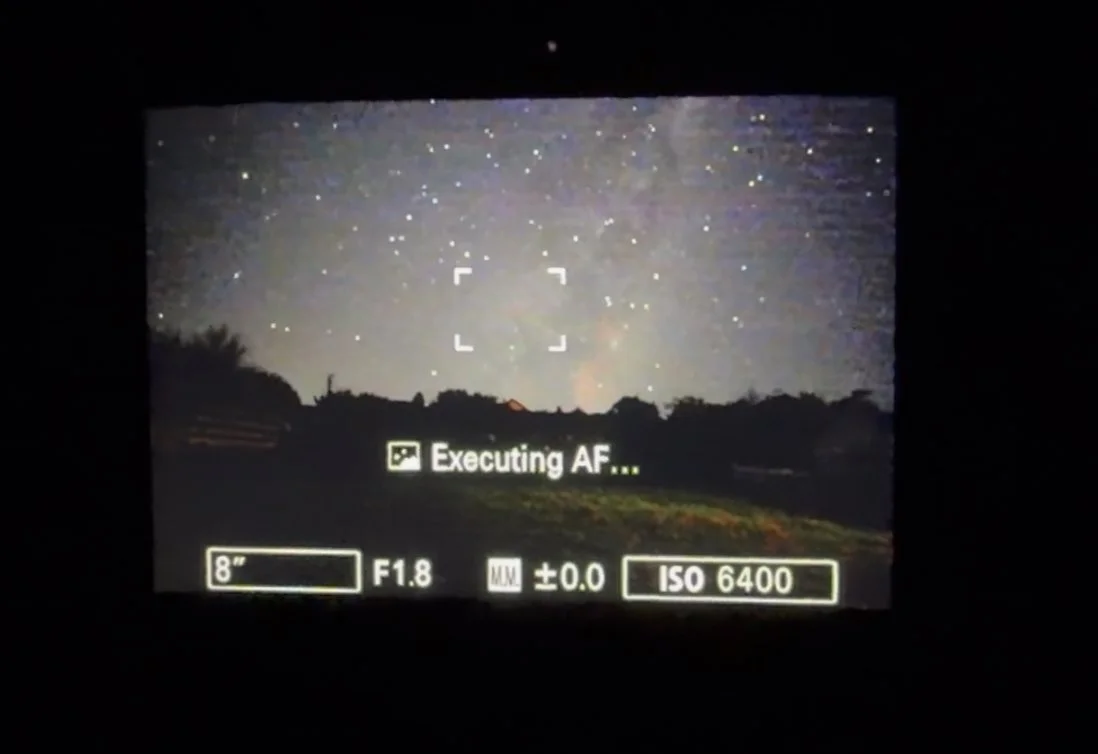
Bright Monitoring + Auto Focus makes composition + focusing easy!
4) ILLUMINATED BACK CAMERA BUTTONS
I wasn’t part of the working group discussions around new features Sony users would want in a new R model, but I can only guess that my fellow astrophotographers have pushed for the illuminated buttons feature that’s BRAND NEW in this model. When you shoot in the dark a lot, you do eventually get used to where all the buttons are using muscle memory without the need to turn on lights and ruin your night vision, BUT this is a super useful feature and one I CAN see myself regularly using! You can choose from 3 levels of lighting and whether you want the buttons to be Always On, Always Off or to Time Out after a few seconds (a power saving feature).
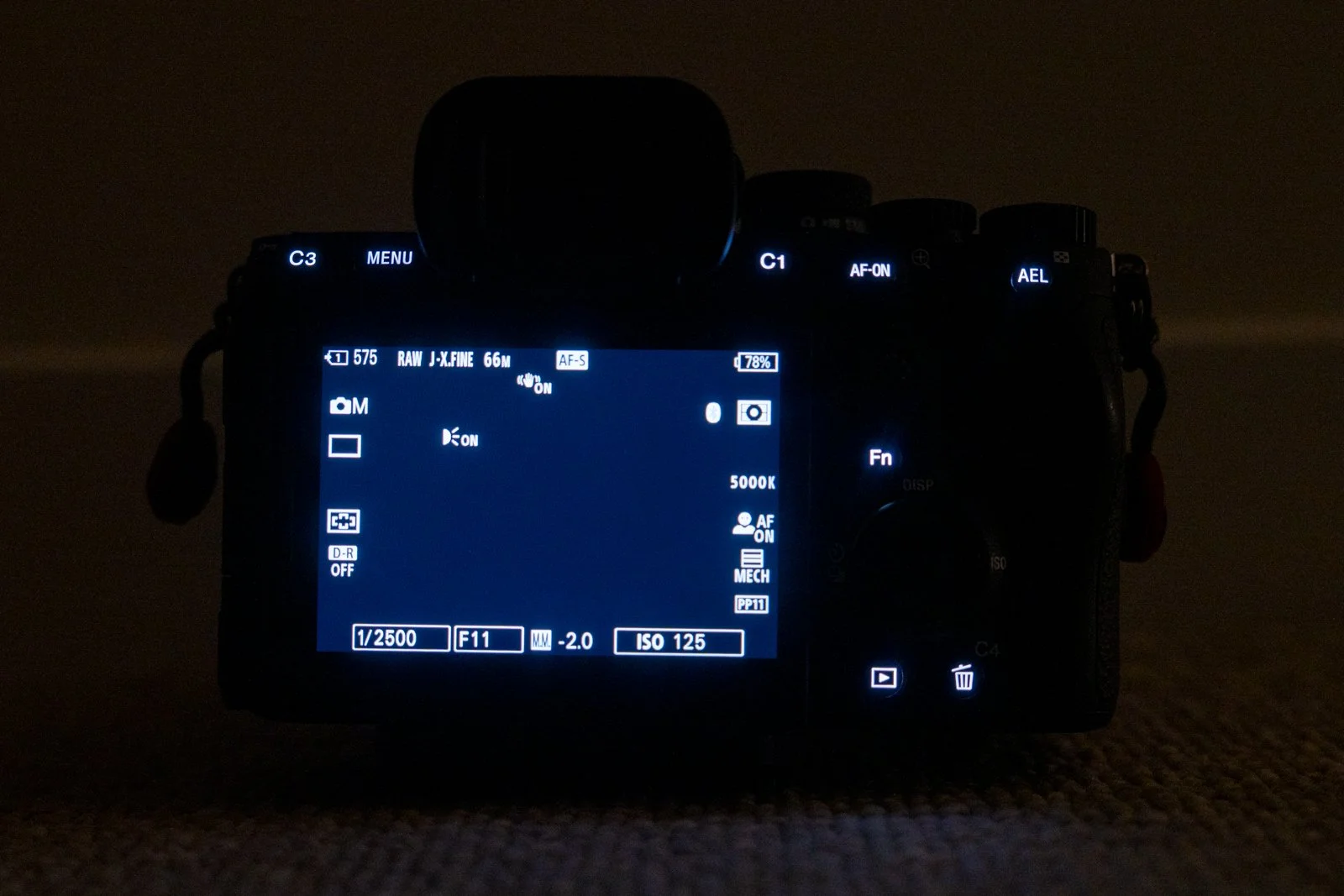
5) NEW POWER SAVING FEATURES
Speaking of power saving, I actually discovered these additional new features by accident the first time I took the camera out for sunrise, wondering why the screen kept dimming after a short while. There are new Power Save features in the Setup → Power Setting Option which automatically dim the brightness of the Monitor and Viewfinder after a selected time. The camera defaults were set to 10 seconds which I felt was too short, so I changed them both to 30 seconds, but I can see this will also help the already improved battery life last even longer.
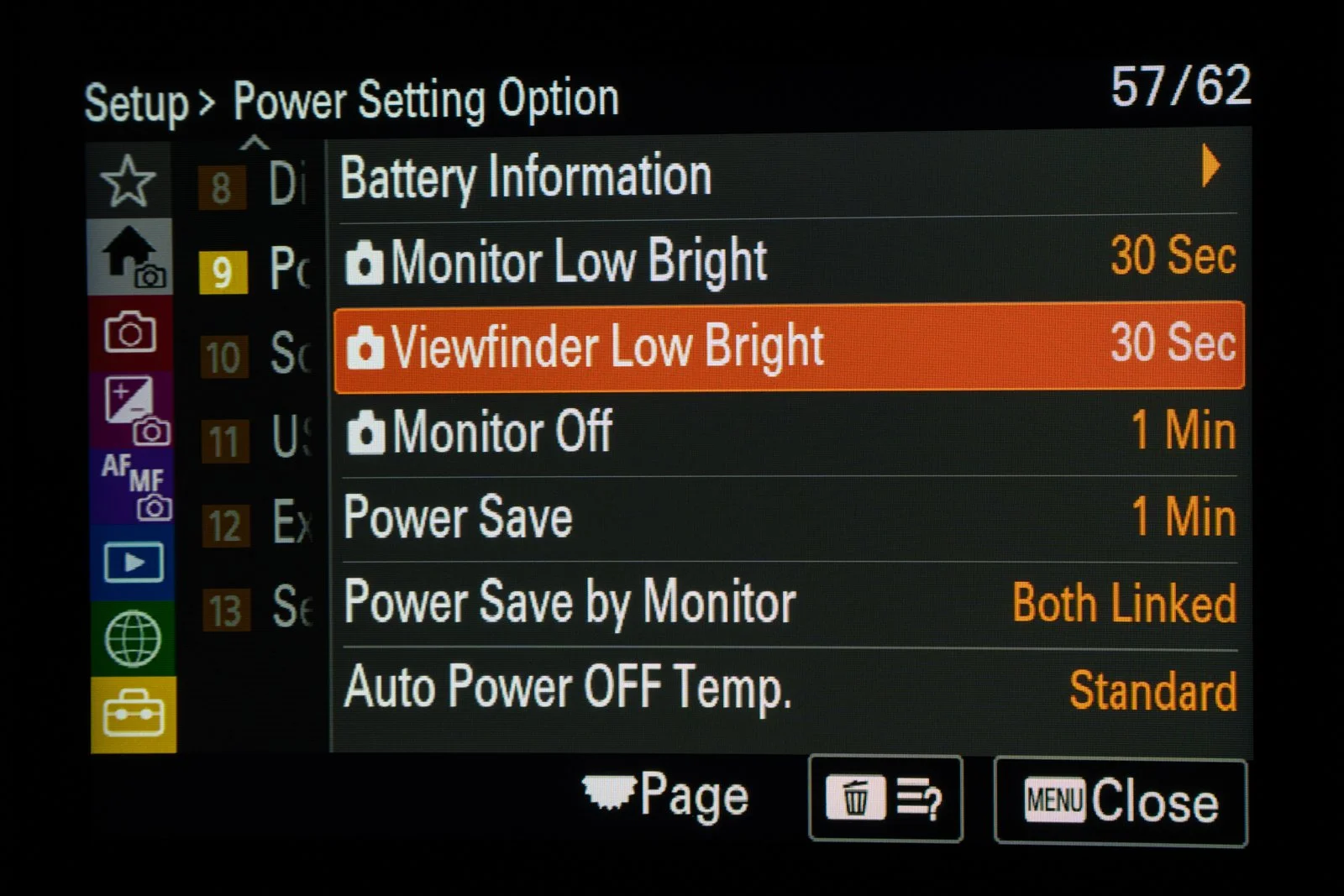
New Power Save Features on the Alpha 7R VI
What about the NEW 67 Megapixels?
While I might like to have seen the 80MP resolution rumours for the Alpha 7R VI be true, I’m actually happy with a 10% increase in megapixel size given all the other technology and features this camera has come with. And let’s face it, 92MB for each Lossless Compressed RAW file is still a large file to work with and store, and I’ve always been confident that I can print really large sizes even with the 61MP I’m using now.
Here’s a quick visual comparison of how those pixel sizes stack up between the a7 V, a1 II, a7R V and the new Alpha 7R VI
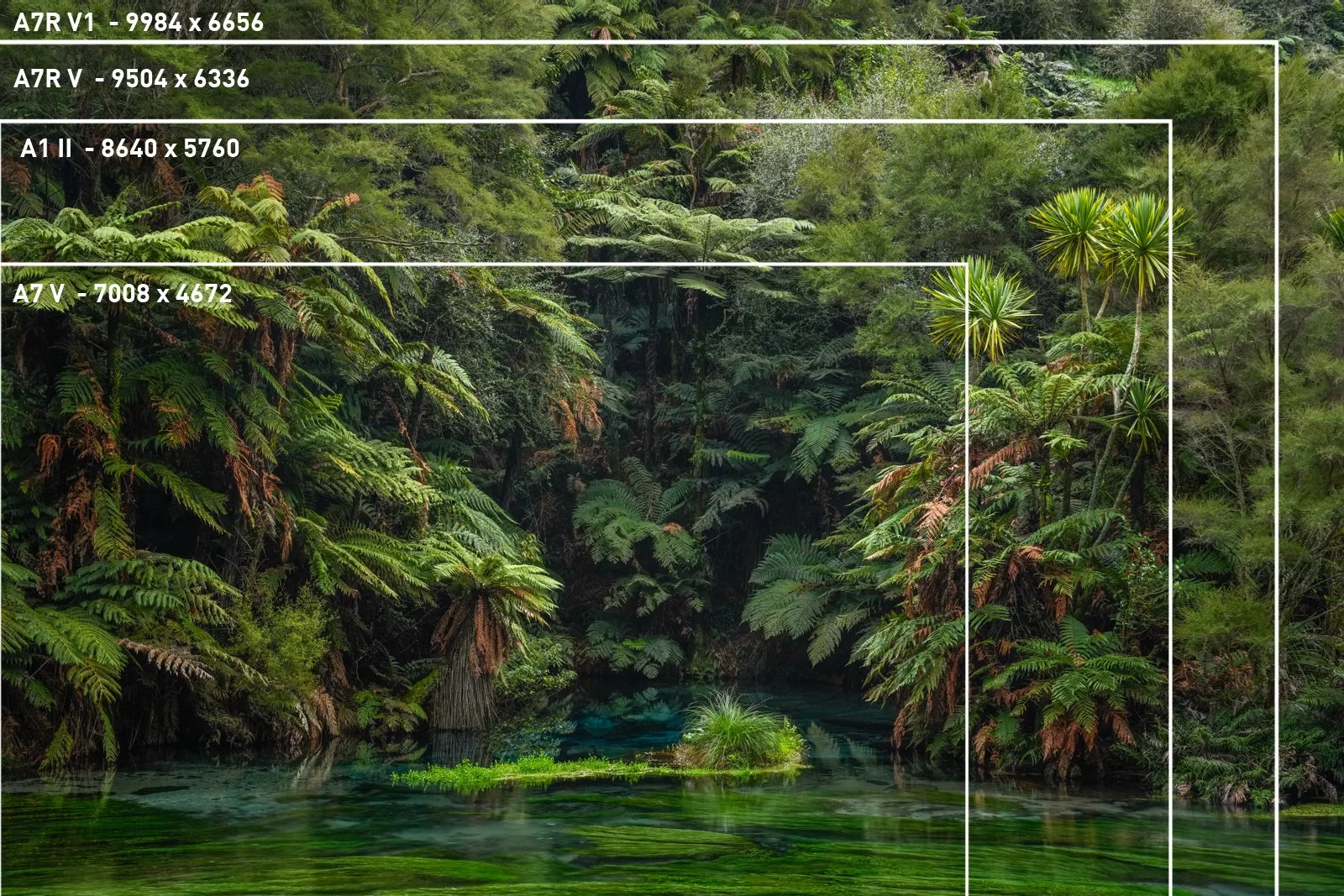
Also take note that the Sony a7R V is still a market leader in resolution for a full-frame camera, even before you factor in the extra 10% the new Alpha 7R VI has!
Why might you want the a1 II instead (NZD retail: $11,299)
If you’re a pro sports or wildlife photographer, you might feel you need the 120 calculations per second, vs 60 the Alpha 7R VI has. You might also prefer to have Drive Modes as a separate dial rather than in the menu, and you might not feel a need for those extra 17MP.
Why might you want the a7 V instead (NZD retail: $5,299)
The a7 V makes sense if you’re looking to save a few dollars, and you don’t need 67MP. Having the extra resolution does take up more space with every file saved which makes for a slower workflow. If you’re not in the habit of printing large resolution prints, and you are regularly processing work in bulk for volume shoots such as weddings/portraits/clients where speed and editing time matters, then 33MP resolution might be preferable.
What will the Alpha 7R VI cost?
Though NZD retail pricing hasn’t been confirmed at the time of writing, it’s expected to be about NZD $8,500, sitting firmly between the a7 V and a1 II in terms of price.
Final Thoughts
Will I be buying the Alpha 7R VI camera? Absolutely, I’m putting my order in as soon as I can!
For me, it’s a no-brainer to have the best R camera in the market for the large scale print work I do, but I now know I’ll also have a powerhouse in speed and accuracy and the confidence to get those pivotal, fleeting moments without missing a beat, or having to borrow a model like the a1 II from Sony when the need arises. It’s almost embarrassing to admit this, but my current second body is the (almost 7 year old) a7R IV and I really don’t enjoy having to find my way around the old style menu so it will be a treat to have both cameras operating on the same menu system.
My overall conclusion is that what you ARE getting with the Alpha 7R VI is a powerhouse ALL ROUNDER!
I'm fortunate that Sony NZ allowed me to test out the features of the new Alpha 7R VI ahead of its official release - but all thoughts and opinions on the new model are my own.